Category: ΝΕΑ ΕΞΩΤΕΡΙΚΟΥ

5
Ιούν

Τα ιταλικά ομόλογα πέφτουν μετά την ομιλία του Conte, όπου περιγράφει τα «ριζοσπαστικά» σχέδια της νέας κυβέρνησης

Τα ιταλικά ομόλογα πέφτουν μετά την ομιλία του Conte, όπου περιγράφει τα «ριζοσπαστικά» σχέδια της νέας κυβέρνησης

  • Η απόδοση των ομολόγων στη Γερμανία είχε περιοριστεί τις τελευταίες ημέρες
  • Ο κ. Conte στέκεται δίπλα στο κόμμα των Πέντε Αστέρων, και το λαϊκό πρόγραμμα πολιτικής του
 

(Bloomberg) –

Τα ιταλικά ομόλογα επέκτειναν τις απώλειες καθώς ο Giuseppe Conte στην ομιλία του προς το Κοινοβούλιο επανέλαβε ότι η νέα λαϊκή κυβέρνηση θα ακολουθήσει ένα ριζοσπαστικό πρόγραμμα πολιτικής.

Οι αποδόσεις των 10ετών ομολόγων αυξήθηκαν για πρώτη φορά σε πέντε ημέρες σε ασφάλιστρο περίπου 227 μονάδων βάσης έναντι των γερμανικών bunds, έχοντας σημειώσει άνοδο έως τις 323 μονάδες βάσης πριν από μία εβδομάδα. Οι χρηματιστές ερμήνευσαν την ομιλία ως δυνητικά αρνητική για τις αγορές ομολόγων και ως δικαιολογία για την πώληση ιταλικού χρέους μετά και την πρόσφατη ανάκαμψη, δήλωσε Christoph Kutt, στρατηγική επικεφαλής των επιτοκίων στην DZ Bank AG.

“Κάποιοι παίκτες ήλπιζαν για μια πιο ισορροπημένη ομιλία, αλλά όπως είπε το κυβερνητικό πρόγραμμα θα βασίζεται στη συμφωνία συνασπισμού, κάποιοι το πήραν αυτό σαν σχέδιο για  περισσότερες δαπάνες”, δήλωσε ο Kutt.

Οι ιταλικές αποδόσεις των 10 ετών αυξήθηκαν 12 μονάδες βάσης στο 2,65% στις 12:15 μ.μ. στο Λονδίνο, ενώ οι αντίστοιχες των γερμανικών υποχώρησαν 2 μονάδες βάσης στο 0,39%.

Ο κ. Conte επιβεβαίωσε ότι η πρώτη ενέργεια της νέας κυβέρνησης θα αφορά τα κοινωνικά δικαιώματα, ενώ θα επιδιώξει επίσης τη μείωση του δημόσιου χρέους. Οι γερουσιαστές πρόκειται να επιβεβαιώσουν το ραντεβού του με ψήφο εμπιστοσύνης περίπου στις 7:30 μ.μ. ώρα Ρώμης. Οι επενδυτές παρακολουθούσαν εάν η κυβέρνηση θα έβγαζε μερικές από τις πιο αμφιλεγόμενες πολιτικές της.

Πηγή: Bloomberg

5
Ιούν

Why Trump’s Trade War Isn’t Worrying Wall Street Economists, Yet

Why Trump’s Trade War Isn’t Worrying Wall Street Economists, Yet

  • President has infuriated trading partners with tariff moves
  • Economists say real risk would be sliding business confidence
By Andrew Mayeda

(Bloomberg) — 

President Donald Trump’s zeal for tariffs has yet to derail the global economic outlook.

While Trump has sown confusion and frustration among fellow political leaders, economists at most Wall Street banks are barely changing their forecasts for solid global growth this year as they estimate only modest fallout from a skirmish over commerce.

Take Trump’s 25 percent steel tariffs. After stripping out food and energy, consumer prices are poised to rise by three basis points in response, Goldman Sachs Group Inc. said in a research note Monday.

The worry remains that Trump may just be getting started. If the president delivers on all his tariff threats, $475 billion in goods would be affected, and core inflation would speed up by about 15 basis points, according to Goldman. That’s still a small increase, but one that might get the attention of the Federal Reserve, which could spur more aggressive policy tightening.

What Next?

“The impact of tariffs on $50 billion here and there, on its own, is relatively limited,” said Torsten Slok, chief international economist at Deutsche Bank AG. “The real danger continues to be the uncertainty about what’s next.”

The damage could get serious if trade tensions sap business confidence, causing executives to put off capital spending and other investment decisions, he said. Business spending is bouncing back after years of caution following the global financial crisis, and is partly driven by the enactment of Republican corporate tax cuts.

Factory purchasing managers see a jump in capital spending this year, according to The Institute for Supply Management’s semi-annual forecast released last month. The investment surge is one of the factors driving the strongest global expansion in seven years.

“You have a lot of conversations with people who are saying, ‘Is my industry next?’” said Slok. The threat of a global trade war is “no longer a tail risk,” he added.

The International Monetary Fund has warned that a trade war could undermine the strongest global upswing in seven years. “Everybody loses in a protracted trade war,” IMF spokesman Gerry Rice said last week.

Trade Costs

Bloomberg Economics estimates a trade war would cost the global economy about $470 billion by 2020 — roughly the size of Thailand’s economy. That projection assumes the U.S. hikes import costs by 10 percent, and the rest of the world retaliates in kind.

For now, Trump’s trade assault hasn’t severely dented confidence among American businesses, according to the Fed’s beige book, which polls firms across the U.S. While some respondents “noted some concern about the uncertainty of international trade policy,” outlooks for near-term growth remain “generally upbeat,” the May beige book reported.

Some economists are stopping short of using the term “trade war.” Analysts at ING Bank NV are calling the current situation a “cold” trade conflict with a muted economic impact.

Protectionist Agenda

Two things need to happen for hostilities to reach the level of a global trade war, ING analysts Viraj Patel and Raoul Leering said in a research note. One, Trump would have to broaden protectionist measures to other sectors — a distinct possibility, given the administration is probing whether car imports represent a security risk. And secondly, the president would also have to respond to Chinese retaliation by raising the ante, such as by slapping a blanket 20 percent duty on all Chinese imports, according to ING.

Beijing is threatening to respond to a direct tariff attack with duties of its own on everything from American soybeans to airplanes. Both sides have refrained from imposing tariffs so far, as they try to hammer out a deal on trade issues.

The economic damage may also broaden if fears of a trade war cause a sharp selloff in risk assets, causing financial conditions to tighten. U.S. stock prices fell sharply in late March after Trump promised to impose tariffs on Chinese goods. Since then, investors appear to have become less jittery about hawkish trade statements by the president.

U.S. stocks closed at a 12-week high Monday, as optimism about the world’s biggest economy more than offset worries about protectionism.

Under ING’s worst-case scenario, which it calls “all-out trade war,” the U.S. economy would take the biggest hit, with output dropping by 2 percent over two years.

“Somebody loses money when you force people to put investments on hold, when things get more expensive than they should have to, when they have to break up supply chains,” Adam Posen, president of the Peterson Institute for International Economics, said in an interview on Bloomberg TV. “All of it adds up.”

–With assistance from Jeanna Smialek and Katia Dmitrieva.


4
Ιούν

UniCredit seeks merger with SocGen

Italy’s UniCredit is plotting to merge with French rival Société Générale in a bold move that would see two of Europe’s big banks join forces, leading the way for an expected round of banking mergers on the continent.

Jean-Pierre Mustier, Unicredit’s French chief executive, has been pioneering the idea for several months, according to people close to the situation. They said no formal approach has been made but SocGen directors have also been studying the possibility of a combination.

Senior figures on both sides stressed discussions were at an early stage and Italy’s volatile political situation had pushed back the timetable for a deal from the original plan of 18 months.

Mr Mustier considers SocGen, whose investment bank he once ran, an ideal partner for the Italian lender, buttressing its investment banking and eastern European operations. For SocGen, one of the main benefits would be gaining a leading position in Italy and Germany, both in retail and corporate banking.

But any UniCredit-SocGen deal would be fraught with difficulty. Aside from Italy’s political turbulence — and hostility to foreigners owning or running Italian businesses — regulators may be unnerved by the combination of two lenders already deemed systemically important.

A merger between the two has been considered by SocGen on several occasions over the past 15 years and in recent months by senior executives. However, on Sunday the bank denied “any board discussion regarding a potential merger with UniCredit”.

UniCredit declined to comment.

Europe’s banks are under increasing pressure to bulk up, due to their relative decline compared with booming US rivals. The Financial Times reported last month that members of Barclays’ board had discussed a plan to combine with UK rival Standard Chartered. The European Central Bank has signalled it would like to see cross-border deals as part of efforts to champion the pan-eurozone banking union.

Mr Mustier has been outspoken on the topic. At the IIF Brussels conference last month he said the bloc needed bigger, pan-European banks to fund credit demand and equity financing.

According to senior financiers, Mr Mustier’s focus on SocGen was evident as far back as the Italian bank’s vital €14bn capital increase last year. During the fundraising he told staff he wanted Unicredit’s market capitalisation to surpass SocGen’s, according to people directly involved in the talks. At Friday’s close, UniCredit was valued at nearly €33bn compared with SocGen’s €32bn. The capital increase will have quashed opposition to any cross-border deals within the Italian banking industry.

Neither group would be ready to proceed with a deal for at least a year, bankers said. Mr Mustier’s repair work on UniCredit, which has been hit hard by billions of euros of non-performing loans, is expected to last at least until mid-2019.

Analysts say SocGen is not in a position to do any deals, either. It has yet to reach an agreement with investigating authorities over its involvement in the Libor rate-rigging scandal and two other probes. Its share price has slipped 13 per cent so far this year as investors have been spooked by the pending fines, weak trading performance at its investment bank and the Libor-related departure of deputy chief executive Didier Valet, widely seen as a successor to CEO Frédéric Oudéa. Mr Oudéa has recently been given another term at the top of the bank, pending shareholder approval next May.

For Mr Mustier any deal would be a “resurrection play”, friends said, potentially installing him as CEO of the combined group a decade after he might have expected to get the top job at SocGen. The investment banker quit the French bank after a court criticised him for failing to spot the errors of rogue trader Jérôme Kerviel. Mr Mustier, who is credited with having turned round Unicredit’s fortunes, has seen the bank’s share price rise 27 per cent since his arrival in the summer of 2016, notwithstanding the giant capital raising and recent political turmoil.

He has always viewed a cross-border deal as essential to the bank’s future strategy. Last autumn he considered a bid for Commerzbank, according to people briefed on the issue, but was rebuffed by the German bank.

Source: link

3
Ιούν

United States of Europe moves CLOSER as Angela Merkel backs Emmanuel Macron EU reforms

In an interview with German paper Frankfurter Allgemeine Sonntagszeitung she said she was in favour of Mr Macron’s plans for a combined military force.

And Mrs Merkel supported the idea of turning the euro zone’s ESM rescue fund into a European Monetary Fund (EMF) with powers to give members hit by sovereign debt troubles short-term credit lines.

The French leader wants a future EMF to act as a buffer in any future financial crises in the bloc, which was nearly torn apart in a debt crisis in 2009.

Mrs Merkel, who has faced criticism for not responding quickly and clearly to Macron’s proposals made in September, said the bailout fund, know as the European Stability Mechanism (ESM), was not sufficient to shield the euro zone from crisis.

The EMF would complement other measures to strengthen the euro, including a banking and capital markets union, she said.

Germany has been demanding clarity on parameters for reducing risks in the banking sector before progress can be made toward completing a banking union through a deposit insurance scheme. The German Chancellor did not say if her concerns had been addressed.

Mrs Merkel told the paper: ”If the whole euro zone is in danger, the EMF must be able to grant long-term credit in order to help countries.

”Such loans would be spread over 30 years and be conditioned on sweeping structural reforms.”
 

Angela Merkel and Emmanuel Macron

Macron and Merkel are getting closer on their EU visions

She added: “In addition I can imagine the possibility of a credit line that is short-term, five years for example.

“As such, we would be able to take under our wing countries that get into difficulties because of extraordinary circumstances.”

A French government source said, however, that more work still needed to be done for an “ambitious agreement on the monetary union”.

Mrs Merkel’s comments were welcomed by the Social Democrats (SPD), junior coalition partners of her conservative bloc in a right-left coalition

that took power earlier this year after an election in September.

“This is very pleasing,” SPD leader Andrea Nahles told the ARD public broadcaster. “Those are totally new notes from Mrs Merkel.”

Angela Merkel and Emmanuel MacronGETTY

Could a United States of Europe be close?

The SPD have been critical of the conservatives’ focus on austerity in the euro zone and had pressed Merkel to engage more actively with Macron on his reform proposals.

Mrs Merkel also said a future EMF would be organised on an intergovernmental basis and national parliaments of member countries would have oversight.

Politicians from Mrs Merkel’s conservative bloc have been cold to Macron’s proposal, saying they are wary that his call for more solidarity could see German taxpayers’ money used to fund profligate member states.

The chancellor also said she backed an investment budget for the euro zone, which would be in the low two-digit billions of euros that would be introduced step by step and evaluated over time to address structural weaknesses of member states.

In another nod to Mr Macron, the German leader said she had a “positive view” of his joint European military intervention force.

“In the future we will have to react to the challenges that we are faced with,” she said.

Source: link

2
Ιούν

Solidarity in euro zone should not lead to debt union: Merkel

Merkel made the remarks in an interview with the Frankfurter Allgemeine Sonntagszeitung when asked about a media report that the anti-establishment 5-Star Movement and far-right League had planned to ask the European Central Bank to forgive 250 billion euros ($296 billion) of Italian debt.

She said that while solidarity among members of the single currency bloc was important that principle “should not lead to a debt union.”

An Italian governing coalition of two parties generally seen as hostile to the euro took power on Friday, calming markets that had been spooked by the possibility of a new election that might have effectively become a referendum on whether to leave the single currency.

“I will approach the new Italian government openly and work with it instead of speculating about it intentions,” Merkel told the paper in an interview to be published on Sunday.

Merkel congratulated Italian Prime Minister Giuseppe Conte in a phone call on Saturday and invited him for talks in Berlin, her office said.

Conte, a little-known 53-year-old law professor, was sworn in on Friday, ending three months of political deadlock in the wake of inconclusive March 4 elections.

Merkel said she was willing to discuss with the new Italian government ways to boost employment rates among young people in Italy.


Source: link

2
Ιούν

Le Maire: We Don’t Want A Trade War – Ball Is in U.S. Court

Le Maire: We Don’t Want A Trade War – Ball Is in U.S. Court

By Andrew Mayeda and Yuko Takeo

(Bloomberg) — 

We still have a few days to avoid a trade war, French Finance Minister Bruno Le Maire told reporters Saturday in Whistler, British Columbia.

  • We have everything prepared to respond to the American decisions, Le Maire says
  • If we want to avoid that escalation, it is up to the American administration to take the right steps
  • We cannot understand this American decision, we are close allies
  • We are ready to respond, but we would prefer not to respond
  • It has been a tense but tough G-7 meeting of finance ministers and central bank governors
  • NOTE: U.S. Isolated at ‘G-6 Plus 1’ as Divisions Sap Western Alliance

Source: Bloomberg

2
Ιούν

‘Lazy Italians’ and ‘ugly Germans’: How the euro sows discord

Italy this week offered Germans and all Europeans a lesson: The euro, which was meant to usher Europeans further along on their road to an “ever-closer union,” is instead increasingly dividing them. Instead of integration, divergence. Instead of harmony, discord. Instead of liberal democracy, populist rancor.

Listen to Matteo Salvini, leader of the right-wing League, one of the two populist parties that will form the next Italian government: “We have a basic principle,” he said. “Only Italians make decisions for Italy, not the Germans… A minister the Germans don’t like is exactly the right minister for us.” A colleague added that it was time “to free the country from the chains that Brussels and Berlin have put on our ankles.”

What, you might ask, did Germany even have to do with the events in Rome this week? Good question. Superficially, nothing. The Italians had run a campaign in which euro-zone politics barely featured. The winners were populists on the left and right, who tried to form an incoherent government with economic policies that would have blown the euro zone apart. When the populists nominated a euro-hater as finance minister, Italy’s president refused. Now the government will be formed with a slightly different cabinet.

Below the surface, however, Germany has a lot to do with Italy’s political crisis. That’s because Germany represents the opposite of the ideas that, more or less, unite the southern euro area, from Greece to France and Italy. Whereas the south demands “solidarity,” Germany fears a “transfer union,”in which northern money permanently subsidizes bad loans and fiscal licentiousness in the south. Where the south clamors for stimulus, Germany demands austerity. Where the south wants fiscal discretion, Germany insists on strict Ordoliberal rules.

01 p48 Southern Europe’s debt burden-01

These are not philosophies that can be reconciled in the long run, no matter how much Angela Merkel fudges in the short run. Instead, these cultural narratives force Europeans to metamorphose into the worst stereotypes others have of them. Germans become “more German,” Italians “more Italian.”

Thus Germans imagine southerners as dissolute and unreliable deadbeats. Der Spiegel ran a story titled “The moochers of Rome” this week. Southerners, meanwhile, resent the finger-pointing, rules-obsessed Germans who presume to lecture them. They pounce on any hint of hypocrisy, which Germany often provides by breaching EU rules.

This psychological chasm dooms the (southern-flavored) proposals by Emmanuel Macron for reforming the eurozone. The northern countries simply won’t stand for it. But the absence of such reforms also dooms the euro zone to another crisis, and then another, and another.

The time has come for supporters, not opponents, of the European idea to contemplate loosening, and even shrinking, the euro zone. Member countries that decide being in the euro club is against their economic interests or philosophies should have a way, temporarily or permanently, to return to a national currency without jeopardizing the entire euro zone. Meanwhile, European integration in other areas — security, foreign and defense policy, for example — should proceed irrespective of how the euro zone develops.

The idea of European integration was born in the rubble of World War II and has without any doubt grown into the greatest peace project in human history. No part of it, including the subordinate question of a common currency, must be allowed to sabotage that bigger idea, and to turn a peace project into a conflict machine.


Source: link

1
Ιούν

Ο στρατηγός έκλεισε τη συνάντηση: Τραμπ – Κιμ 12 Ιουνίου στη Σιγκαπούρη

Ο πρόεδρος των ΗΠΑ Ντόναλντ Τραμπ δήλωσε την Παρασκευή ότι θα συναντηθεί εν τέλει με τον Βορειοκορεάτη ηγέτη Κιμ Γιονγκ Ουν στις 12 Ιουνίου στη Σιγκαπούρη. Είχε προηγηθεί νωρίτερα την Παρασκευή η συνάντηση του Αμερικανού προέδρου στον Λευκό Οίκο με το «δεξί χέρι» του Κιμ Γιονγκ Ουν, τον στρατηγό Κιμ Γιονγκ Τσολ.

Ο στρατηγός παρέδωσε στον Ντόναλντ Τραμπ επιστολή εκ μέρους του ηγέτη της Βόρειας Κορέας. Ο Βορειοκορεάτης στρατηγός έφθασε στον Λευκό Οίκο λίγο μετά τις 13.00 τοπική ώρα (20.00 ώρα Ελλάδας). Ο Κιμ Γιονγκ Τσολ είχε συναντηθεί με τον επικεφαλής της αμερικανικής διπλωματίας Μάικ Πομπέο στη Νέα Υόρκη την Τετάρτη και την Πέμπτη.

Η Βόρεια Κορέα επιθυμεί την αποπυρηνικοποίηση, διαβεβαίωσε ο πρόεδρος των ΗΠΑ Ντόναλντ Τραμπ. “Πιστεύω ότι πιθανότατα θα είναι μια πολύ επιτυχημένη, τελικά μια επιτυχημένη διαδικασία”, είπε ο Τραμπ μιλώντας σε δημοσιογράφους στον κήπο του Λευκού Οίκου μετά τη συνάντηση που είχε με τον Βορειοκορεάτη στρατηγό.

Αναφερόμενος στην επιστολή που του παρέδωσε ο τελευταίος, είπε ότι η παρουσίαση αυτή κατέληξε να γίνει μια “μακρά συνομιλία”. Χαρακτήρισε δε “πολύ ωραίο, πολύ ενδιαφέρον γράμμα” την επιστολή του Κιμ Γιονγκ Ουν. Σύμφωνα με το πρακτορείο Reuters όμως λίγο αργότερα, σε μια αποστροφή των δηλώσεών του, είπε ότι δεν έχει ανοίξει ακόμη αυτήν την επιστολή.

Πρόσθεσε ότι πιστεύει πως ο Κιμ Γιονγκ Ουν είναι δεσμευμένος στην αποπυρηνικοποίηση της χώρας του. “Πιστεύω ότι θα ξεκινήσουμε μια σχέση και θα ξεκινήσει στις 12 Ιουνίου”, συνέχισε.

Ο Τραμπ σημείωσε επίσης ότι ο πρόεδρος της Κίνας Σι Τζινπίνγκ βοήθησε αρκετά ώστε να επιτευχθεί συμφωνία για τη συνάντησή του με τον Κιμ.

Πηγή: tanea.gr

29
Μάι

This Private Island Hotel Has Only One Suite

Fitness executive Jim Worthington had one goal for the luxury trip he was planning to celebrate the birthday of his girlfriend, Kim Levins: privacy. “I wanted to be 100 percent away from everybody,” he says from his office in Bucks County, Pa. “It was her 30th birthday, and I didn’t want to share it with anybody but her.”

So he booked the couple into Gladden Private Island, a tiny hotel off the coast of Belize that opened in December. It consists of a single two-bedroom villa. The island “is less than an acre. You could walk from one tip to the other, and it would take less than 30 seconds,” he says, laughing. “It was like being Robinson Crusoe—you have no idea the staff is even there.”

He and Levins spent their days enjoying the solitude, sitting at the edge of the water for four or five hours straight, saying perhaps three words.

“The beauty of where you are is unbelievable,” Worthington says. Indeed, the two were so impressed that they’re planning to make the island a regular vacation spot, taking a week to decompress there every 18 months or so.

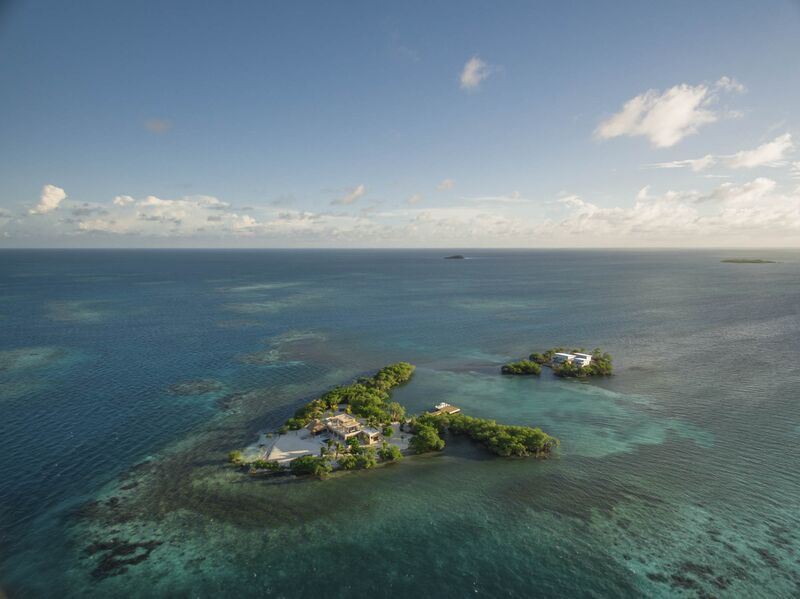
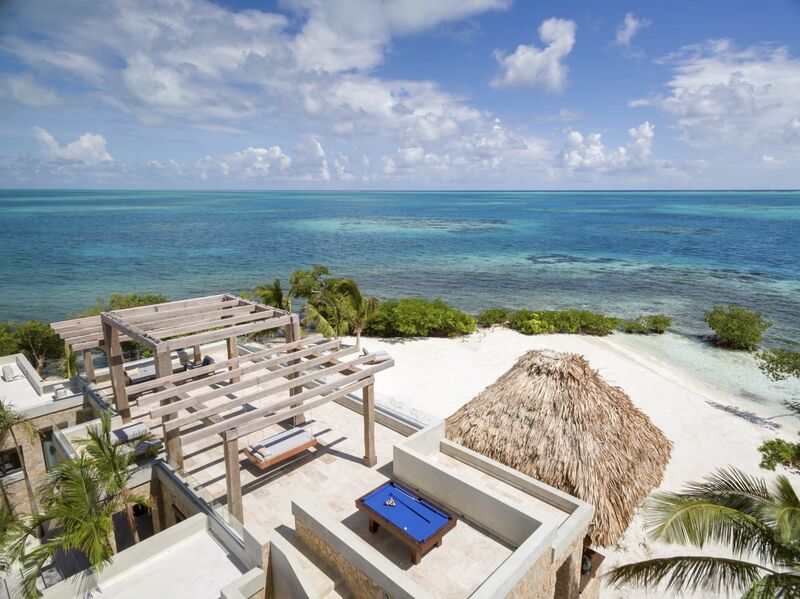
The Gladden Private Island resort is actually two islands—one for you and one for staff.
Source: Gladden Private Island

It might sound like a risky proposition: rather than a vacation villa, a personal hotel with a full cadre of staff to cater to a couple’s every whim (from $2,950 per night for two, all-inclusive). But this is the hottest new niche in high-end travel—not a penthouse suite but an entire island just for you.

Gladden is the brainchild of Chris Krolow, the host of HGTV’s Island Hunters, who’s spent the past 20 years selling and leasing private islands. “It’s my baby,” he says. The idea was simple: Create the ultimate couples-only (make that: couple-only) hotel, a luxe hideaway for barefoot sojourners at which all evidence of other humans is concealed.

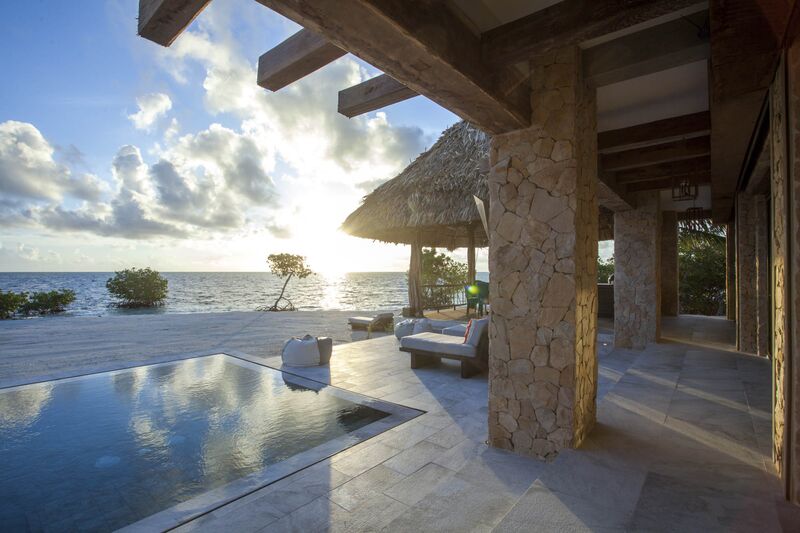
The view from the pool deck at Gladden, where you never have to see another human if you don’t want to.
Photographer: Benedict Kim

Set on a pair of mangrove-fringed islands a few miles off the southern coast of Belize, Gladden is accessible from the capital, Belize City, itself a nonstop flight from several hubs in North America. From there it’s a 30-minute helicopter transfer to the resort, making Gladden workable as a long weekend getaway.

The setting is superb. The coast of this Central American nation is fringed with a low-lying archipelago of more than 400 atolls set in crystal blue waters reminiscent of the Maldives or the South Pacific.

“This part of Belize is insanely beautiful. It’s like a jewelry box of blue all the way around,” Krolow says. “The color, the clarity of the water—it’s like nowhere on the planet.”

Al fresco massages are on offer, whenever you like.
Source: Gladden Private Island

Having two islands is key to pulling off the concept, he says. It allows him to keep staff accommodations, buildings for generators, and other infrastructure on the second, smaller island, so guests can feel completely alone. The employees consist of two couples who tag-team on everything from cooking (one of the women is a certified Le Cordon Bleu chef) to spa treatments (massages are offered, gratis, as often as guests wish). And to prevent visitors from getting startled by the staff, there are small warning lights in every room of the hotel that flash red when support team members are venturing across from their standalone islet.

Although Gladden has two bedrooms and can accommodate four guests, 70 percent of Krolow’s bookings have come from couples like Worthington and Levins who are often celebrating birthdays or anniversaries. In an overconnected world, seclusion has become even more of a benchmark of luxury.

One of the suite’s two bedrooms.
Source: Gladden Private Island
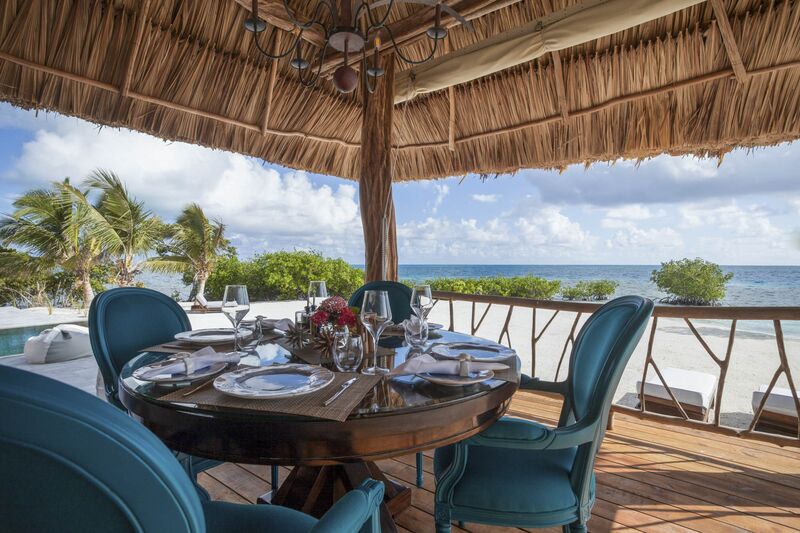
At Gladden, everything takes place with a view of the water.
Source: Gladden Private Island

Among other private-island resorts is Little Peter Oasis ($4,995 for a four-night package), also in Belize, which has space for four guests in a two-bedroom villa built over the edge of a private lagoon protected by a reef. It’s a place where you can channel your inner Brooke Shields, with or without a bikini.

In the Maldives, Cheval Blanc Randheli, the tropical offshoot of French resort Courchevel 1850, has 45 traditional villas on one site but also operates a three-bedroom “owner’s villa” (price upon request) on a nearby private island only a five-minute sail away. Thirty staff are available to either pamper you or ignore you, whichever your preference.

The 14-acre Dolphin Island in Fiji ($2,790 for two nights) sleeps eight, and a local fisherman will stop by every day to drop off his freshest catch for the on-site chef to prepare. Satellite Island ($2,730 for four people for two nights) is a rugged, high-end hideaway with a lodge for one family off the coast of Tasmania. It’s ideal for outdoors types keen to hike in isolation or swim in crisp, clear waters. In northeast Ireland, the lakeside Trinity Island Lodge is a converted granary that once served the now ruined Trinity Abbey in nearby Cavan. Starting from $1,297 per week for six, it features its own sauna and game room, as well as miles of forest trails.

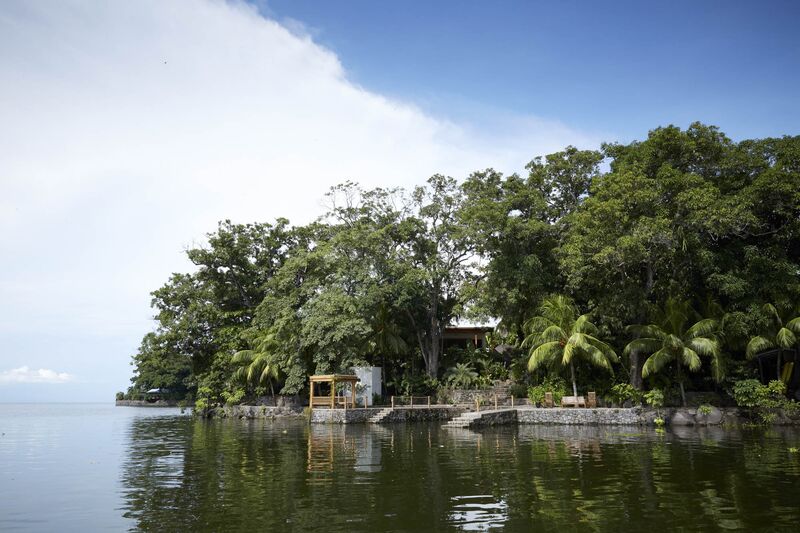
A view of the secluded Welcome Beyond property in Nicaragua.
Photographer: Paul Massey

According to Chris Laugsch, who runs the high-end villa rental agency Welcome Beyond, “People have seen and done the five-star hotels—that’s the usual stuff. More and more, people really want to disconnect during their holidays, and what better way to do that than on a completely private island?”

Eager to meet the demand, he’s just added to his portfolio an entirely private island, an eight-person hideaway off Nicaragua’s coast that’s fully staffed, much like Gladden.

With the growing trend clearly meeting a need (or at least a strong desire), it’s no wonder that Gladden is sold out for much of next year—or that Krolow is planning a sister property on a similar island in nearby Nicaragua. But he isn’t sure he’ll ever be able to indulge his ultimate goal, which he mulled before beginning construction on Gladden.

“I wanted to take it one step further and make it for one person,” he says. “But not enough people travel alone.”

Source: link
27
Μάι

Τον οικονομολόγο Κ. Κοτταρέλλι καλεί ο ΠτΔ για σχηματισμό κυβέρνησης τεχνοκρατών

Ο καθηγητής Τζουσέπε Κόντε παρέδωσε την εντολή σχηματισμού κυβέρνησης, επιβεβαίωσε ο γραμματέας του προεδρικού μεγάρου Κυρηνάλιου. Οι προσπάθειές του, δηλαδή, απέβησαν άκαρπες και είναι πιθανός ο σχηματισμός κυβέρνησης τεχνοκρατών.

Όπως διέρρευσε από το προεδρικό μέγαρο Κυρηνάλιο, ο Ιταλός πρόεδρος Σέρτζιο Ματταρέλλα πρόκειται να συναντήσει την Δευτέρα το πρωί τον οικονομολόγο Κάρλο Κοτταρέλλι για να του αναθέσει εντολή σχηματισμού κυβέρνησης τεχνοκρατών.

Ο Κοτταρέλλι, με θητεία και στο Διεθνές Νομισματικό Ταμείο, είχε ετοιμάσει λίστα για περικοπές άχρηστων δημοσίων δαπανών, ως σύμβουλος των κυβερνήσεων των Ενρίκο Λέττα και Ματτέο Ρέντσι.

Είναι πιθανόν, βέβαια, η κυβέρνηση αυτή να μην λάβει ψήφο εμπιστοσύνης από το κοινοβούλιο, να διαχειριστεί μόνον τις τρέχουσες υποχρεώσεις και να αποφασιστεί, τελικά, προσφυγή σε πρόωρες εκλογές το Φθινόπωρο.

«Κατέβαλα κάθε δυνατή προσπάθεια σε κλίμα πλήρους συνεργασίας», δηλώνει ο Τζουσέπε Κόντε

Ο καθηγητής Τζουσέπε Κόντε έκανε μια σύντομη δήλωση κατά την έξοδό του από το μέγαρο Κυρηνάλιο.

«Ευχαριστώ τον πρόεδρο της Δημοκρατίας και τους επικεφαλής της Λέγκα και των Πέντε Αστέρων. Κατέβαλα κάθε δυνατή προσπάθεια σε κλίμα πλήρους συνεργασίας με τις πολιτικές δυνάμεις που με υπέδειξαν», τόνισε ο Κόντε

Σ. Ματαρέλα: Άσκησα τον ρόλο που ορίζει το Σύνταγμα

Ο Ιταλός πρόεδρος Σέρτζιο Ματταρέλλα απευθύνθηκε με τηλεοπτικό διάγγελμα στους Ιταλούς και εξήγησε για ποιο λόγο δεν συναίνεσε στον διορισμό του Πάολο Σαβόνα ως επικεφαλής του υπουργείου Οικονομικών, και για ποιο λόγο ναυάγησε η προσπάθεια σχηματισμού κυβέρνησης.

Πιο αναλυτικά, ο Ιταλός πρόεδρος, μεταξύ των άλλων, υπογράμμισε:

«Είχε προκύψει πλειοψηφία της Λέγκα και των Πέντε Αστέρων.

Ευνόησα την προσπάθειά τους, περιμένοντας να ολοκληρώσουν το πρόγραμμά τους και να το εγκρίνουν τα μέλη των δυο κομμάτων, παρά το ότι ήξερα ότι θα υπήρχαν επικρίσεις.

Δέχθηκα πρόταση να ηγηθεί της κυβέρνησης ένας πρωθυπουργός ο οποίος δεν είχε εκλεγεί στο κοινοβούλιο.

Κανείς δεν μπορεί να πει ότι παρεμπόδισα την δημιουργία της κυβέρνησης. Συνόδευσα με μεγάλο πνεύμα συνεργασίας αυτή την προσπάθεια.

Είχα τονίσει στον εντολοδόχο πρωθυπουργό ότι θα έδειχνα ιδιαίτερη προσοχή για τις σχετικές επιλογές των επικεφαλής κάποιων υπουργείων.

Σήμερα το απόγευμα ο καθηγητής Κόντε μου παρουσίασε προτάσεις του για υπουργούς, που εγώ έπρεπε να επικυρώσω με την υπογραφή διαταγμάτων.

Έχω έναν ρόλο εγγυητή, ο οποίος δεν δέχεται επιβολές.

Δέχθηκα όλες τις προτάσεις εκτός από εκείνη για τον υπουργό Οικονομικών. Πρόκειται για ένα άμεσο μήνυμα που συνδέεται με την εμπιστοσύνη ή τον συναγερμό των χρηματοοικονομικών πρωταγωνιστών. Ζήτησα να το αναλάβει κύριος πολιτικός της κυβερνητικής πλειοψηφίας, ο οποίος να μην στηρίζει την γραμμή που θα μπορούσε να προκαλέσει την έξοδο της Ιταλίας από το Ευρώ. Κάτι που διαφέρει από μια ισχυρή στάση υπέρ της αλλαγής προς το καλύτερο της κατάστασης στην ΕΕ.

Δεν υπήρξε, όμως, θετική διάθεση, και ο Κόντε επέστρεψε την εντολή.

Η αβεβαιότητα της στάσης μας για το ευρώ προκάλεσε συναγερμό σε ξένους και ιταλούς επενδυτές. Η άνοδος του σπρεντ αυξάνει το δημόσιο χρέος και μειώνει την δυνατότητα δαπανών του δημοσίου.

Οι απώλειες στο χρηματιστήριο καίνε αποταμιεύσεις με ουσιαστικό κίνδυνο για τα νοικοκυριά μας.

Πρέπει να έχουμε υπόψη μας και την πιθανότητα αύξησης των τόκων των δανείων για ακίνητα και επιχειρήσεις.

Έχω την υποχρέωση, βάσει του Συντάγματος, να προστατέψω τις αποταμιεύσεις των Ιταλών. Με αυτό τον τρόπο επιβεβαιώνεται η ιταλική κυριαρχία, ενώ στέλνουμε πίσω απαράδεκτες κρίσεις για τη χώρα μας που διαβάσαμε στον Τύπο άλλης ευρωπαϊκής χώρας.

Έκανα ό,τι μπορούσα για να σχηματισθεί πολιτική κυβέρνηση, αλλά υπερασπίζομαι το Σύνταγμα. Η συμμετοχή στο ευρώ είναι βασική για την χώρα μας και την προοπτική των νέων μας. Αν κάποιος θέλει να το συζητήσει, χρειάζεται σαφής εμβάθυνση

Σε σχέση, τέλος, με το αίτημα για πρόωρες εκλογές από πολιτικά κόμματα, θα το αποφασίσω ανάλογα με το τι θα συμβεί στο κοινοβούλιο. Τις επόμενες ώρες θα αναλάβω μια πρωτοβουλία».

Λ. Ντι Μάιο: Πρέπει να μας πουν ότι ο εκλογές είναι άχρηστες και ότι τις κυβερνήσεις τις αποφασίζουν οι οίκοι αξιολόγησης

Ο αρχηγός των Πέντε Αστέρων Λουίτζι Ντι Μάιο αναφέρθηκε στην αποτυχία της προσπάθειας σχηματισμού κυβέρνησης, με αναφορά στην στάση του ιταλού προέδρου της Δημοκρατίας.

«Πρέπει να μας πουν, λοιπόν, ότι ο εκλογές είναι άχρηστες και ότι τις κυβερνήσεις τις αποφασίζουν οι οίκοι αξιολόγησης και τα χρηματοπιστωτικά λόμπι», δήλωσε σε μήνυμά του στο διαδίκτυο ο Ντι Μάιο.

«Πρόκειται για ένα επίπεδο της θεσμικής σύγκρουσης που δεν είχαμε ζήσει ποτέ. Και το θέμα είναι ότι αν ξαναψηφίσουμε, πάρουμε το 80% και ξαναπροτείνουμε τον Σαβόνα, θα μας πουν και πάλι όχι», πρόσθεσε ο αρχηγός των Πέντε Αστέρων.

«Η Ιταλία έχει ένα μεγάλο πρόβλημα, η Δημοκρατία μας δεν είναι ελεύθερη», τόνισε τέλος ο Ντι Μάιο.

Σύμφωνα με το πρακτορείο ειδήσεων Ansa, τέλος, το ακροδεξιό κόμμα Αδέλφια της Ιταλίας έκανε γνωστή την πρόθεσή του να κινήσει την διαδικασία κατά του προέδρου Ματταρέλλα για εσχάτη προδοσία, και τα Πέντε Αστέρια θα αποφασίσουν αν θα στηρίξουν ή όχι την κίνηση αυτή.

Πάολο Τζεντιλόνι: Τώρα πρέπει να σώσουμε την μεγάλη μας χώρα

Ο υπηρεσιακός πρωθυπουργός Πάολο Τζεντιλόνι εξέφρασε την υποστήριξή του προς τον πρόεδρο της Ιταλικής Δημοκρατίας Σέςρτζιο Ματαρέλα. «Τώρα πρέπει να σώσουμε την μεγάλη μας χώρα», είπε.

Από την πλευρά του ο επικεφαλής του Κινήματος των 5 Αστέρων Λουίτζι Ντι Μάιο δήλωσε ότι η απόρριψη του ευρωσκεπτικιστή κθηγητή Πάολο Σαβόνα για την θέση του υπουργού Οικονομικών είναι «απαράδεκτη».

«Πρόκειται για μία πρωτοφανή σύγκρουση θεσμών», δήλωσε ο Ντι Μάιο μέσω του Facebook. «Ποιος ο λόγος να ψηφίζει κανείς, αν αποφασίζουν οι οίκοι αξιολόγησης;»

Πηγή: link

Comodo SSL