May 2017

10
May

Οι Anonymous προειδοποιούν: Ετοιμαστείτε για τον Γ’ Παγκόσμιο Πόλεμο

Οι Anonymous προειδοποιούν: Ετοιμαστείτε για τον Γ’ Παγκόσμιο Πόλεμο.Σε νέο μήνυμα τους προειδοποιούν τον κόσμο να ετοιμαστεί για τον Γ’ Παγκόσμιο Πόλεμο εν μέσω των αυξανόμενων εντάσεων μεταξύ ΗΠΑ και Βόρειας Κορέας (VIDEO).

Σε ένα νέο μήνυμα τους οι Anonymous προειδοποιούν τον κόσμο να ετοιμαστεί για τον Γ’ Παγκόσμιο Πόλεμο εν μέσω των αυξανόμενων εντάσεων μεταξύ ΗΠΑ και Βόρειας Κορέας.

Στο βίντεο που ανέβασαν στον λογαριασμό τους στο YouTube οι Anonymous, υπό τον τίτλο «They are preparing for what comes next… (WW3 2017-2018)», ένας άνδρας που φορά μαύρο μανδύα και τη μάσκα του Guy Fawkes εξηγεί πώς οι ενέργειες των ΗΠΑ, της Κίνας και της Ιαπωνίας, που συμμετέχουν στις εντάσεις μεταξύ Βόρειας Κορέας και Νότιας Κορέας, υποδηλώνουν ότι ένας πόλεμος τεραστίων διαστάσεων είναι ορατός στον ορίζοντα.

«Όλα τα σημάδια ενός διαφαινόμενου πολέμου στην κορεατική χερσόνησο εμφανίζονται. Σε αντίθεση με τους παλαιότερους παγκόσμιους πολέμους, αν και προφανώς θα υπάρξουν στρατιωτικά στρατεύματα, η μάχη πιθανότατα να είναι σκληρή, βίαιη και γρήγορη. Αυτήν τη φορά όμως θα είναι και παγκοσμίως καταστροφική, τόσο σε περιβαλλοντικό όσο και σε οικονομικό επίπεδο», αναφέρει, μεταξύ άλλων, το μέλος των Anonymous.

«Προετοιμαστείτε για αυτό που έρχεται στη συνέχεια. Είμαστε οι Anonymous. Είμαστε λεγεώνα. Δεν συγχωρούμε, δεν ξεχνάμε», προσθέτουν οι Anonymous.

Δείτε το βίντεο:


ΠΗΓΗ: Mirror

10
May

Europe needs true fiscal integration, not its own IMF

Europe needs true fiscal integration, not its own IMF.THE euro-zone debt crisis exposed a critical need for stronger European financial safety nets and institutions. In March 2010,Thomas Mayer and Daniel Gros, two German economists, made a strong case for the creation of a European Monetary Fund (EMF). In the end, European leaders agreed on a European Financial Stability Facility (EFSF) in May 2010. This was later transformed into the European Stability Mechanism (ESM), which today works alongside the IMF in Europe’s financial-assistance programmes.

The creation of the ESM was a major step in the process of integrating and completing the euro area. It offered a powerful mechanism to backstop sovereign debt markets and deal with sudden stops in capital flows at a time of acute crisis. But over the years, as the more fundamental flaws in the architecture of European Monetary Union (EMU) have come to light, this approach has proved its limits. The ESM now needs to evolve.

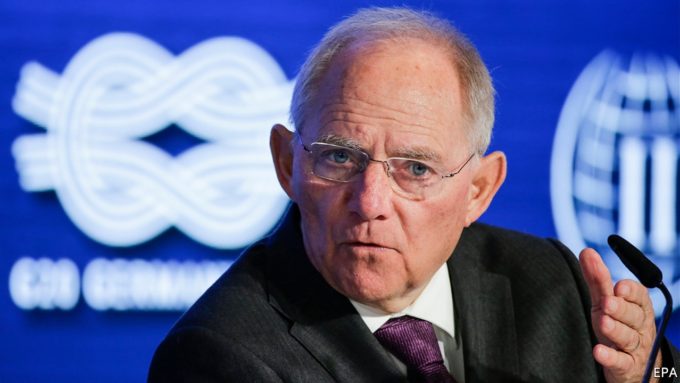
Wolfgang Schäuble, the German finance minister, is taking a proactive approach. He recommends that the ESM be turned into a true European Monetary Fund (EMF). It is an appealing idea. While cooperation between regional and international safety nets has become inevitable, the participation of the IMF in Europe is hardly sustainable in its current form. A more robust European crisis-management framework is required. However, the new German proposal for an EMF is incomplete.

As currently outlined, the role of the EMF would be limited to managing crises within the monetary union. It would simply provide a modest safety net in return for policy intrusion: what Jean-Claude Trichet once called “federalism by exception”. Instead the euro area should promote fiscal federalism. This means completing the euro-zone policy framework with a real budget, which would relieve the European Central Bank of politically sticky responsibilities. In addition, member countries need to increase democratic integration.

The EMF as envisaged by Mr Schäuble is designed to force debtor countries to proceed with unilateral and often ill-designed adjustments—very much like the existing framework. Finance ministers have methodically undone all other functions, like the possibility of direct bank recapitalisation and a backstop to the banking union, which had been agreed to by European heads of states and government in the summer of 2012. Such an EMF would only be the appendix of a euro area which enshrines its unhappy status as a gold-plated fixed-exchange-rate regime.

However, the proposal is prompting much-needed discussion about the creation of a real budget for the euro area. This could materialise from a transformation of the European Stability Mechanism. If European governments decided to strengthen the architecture of the euro decisively, they could bring the ESM under the authority of the European Commission as well as the scrutiny of a euro chamber of the European Parliament.

The ESM could continue to perform its current financial-assistance functions when needed. The Commission has accumulated almost 10 years of experience managing financial crises, which could hardly be replicated by a new institution.

Other functions could gradually be added so that the ESM would morph into a full-fledged euro-zone treasury. Initially, it could serve as a last-resort backstop in case of banking crises. It could subsequently expand its role to deliver the supply of safe assets required to respond to macroeconomic shocks.

For the single currency to continue to be economically and politically sustainable, the euro area needs a budget that could support investment in downturns and facilitate limited, temporary transfers via an unemployment-insurance scheme.

Unlike an EMF, a Euro treasury would be a way to restore discipline at the same time as strengthening the area’s resilience thanks to the stabilising power of a euro budget. The history of fiscal federalism in America, and in particular the advocacy of America’s first secretary of the Treasury, Alexander Hamilton, for the creation of a federal budget, suggests that steps to discipline states were only made credible by a bold move towards fiscal federalism. There is probably no other way for the euro area to proceed.Establishing a debt-restructuring framework without a budget would only increase the inherent instability of the single currency.

Apart from the economic consequences, the main danger of this EMF would be to weaken European institutions further by strengthening the roles of the ESM which replicate existing capacity at the European Commission—making the board of the ESM, that is, the finance ministers of the Eurogroup, enforce rules and undertake responsibilities that the Commission is wrongly perceived to be unfit to fulfill. This would reinforce the euro area’s dysfunctional economic governance by strengthening yet again a forum governed by the rules of unanimity. The experience of the past few years suggests that the intersection of 19 different red lines rarely meets the European general interest.

Worse, it would strengthen the veto rights of big countries such as France and Germany to the detriment of the balance that the Commission provides. This would extend the technocratic rule of the euro area further and fuel both the executive and the democratic deficits at a time when there are growing demands for clear responsibility and accountability. In contrast, a budget for the euro, managed by the Commission, would change the ineffective inter-governmental management of the single currency by empowering the commissioner for economic and financial affairs instead of the Eurogroup’s president.

All in all, the idea of an EMF sounds like a generous proposal to integrate the euro area and improve the workings of adjustment programmes. In reality it is a dead end that those interested in building a strong and genuine monetary union should use as a stepping stone to promote a real budget for the euro area and a revamp of its economic governance.

Laurence Boone is head of research at AXA IM, chief economist of the AXA Group and a former economic advisor and Sherpa to President François Hollande. Shahin Vallée is a former economic advisor to Emmanuel Macron.

Source:link

10
May

Ντράγκι: Νωρίς να πούμε ότι νικήσαμε τη μάχη του πληθωρισμού

Ντράγκι: Νωρίς να πούμε ότι νικήσαμε τη μάχη του πληθωρισμού.«Είναι πολύ νωρίς να κηρύξουμε τη νίκη στη μάχη για τον πληθωρισμό» υποστήριξε ο πρόεδρος της Ευρωπαϊκής Κεντρικής Τράπεζας (ΕΚΤ), Μάριο Ντράγκι, κατά τη διάρκεια ομιλίας του στο ολλανδικό Κοινοβούλιο.

Παίρνοντας θέση στη δημόσια συζήτηση για τη σταδιακή απόσυρση των μη συμβατικών μέτρων, ο επικεφαλής της ΕΚΤ ξεκαθάρισε ότι «είναι πολύ νωρίς να πούμε ότι πετύχαμε», καθώς ο δομικός πληθωρισμός παραμένει υποτονικός.

«Τα στοιχεία δεν προμηνύουν μια πειστική ανοδική τάση» έσπευσε να προσθέσει.

Στο πλαίσιο αυτό, επανέλαβε ότι τα οφέλη της υπερχαλαρής νομισματικής πολιτικής «υπερισχύουν ξεκάθαρα» των πιθανών επιπτώσεων.

Όσον αφορά την πορεία της οικονομίας, παραδέχθηκε ότι τα μακροοικονομικά μεγέθη επιβεβαιώνουν πως η κυκλική ανάκαμψη της Ευρωζώνης γίνεται ολοένα και πιο εύρωστη.

Ταυτόχρονα, συμπλήρωσε, οι καθοδικοί κίνδυνο έχουν περιοριστεί περαιτέρω.

Πηγή:link

10
May

Σε χαμηλό 5ετίας η απόδοση του 10ετούς ομολόγου

Σε χαμηλό 5ετίας η απόδοση του 10ετούς ομολόγου.Στο χαμηλότερο επίπεδο των τελευταίων πέντε ετών κινείται η απόδοση των ελληνικών ομολόγων ,αποδεικνύοντας τη θεαματική βελτίωση στην αγορά.

Συγκεκριμένα, αυτή την ώρα , η απόδοση του 10ετούς ομολόγου υποχωρεί κατά 4,7 μονάδες βάσης στο 5,647%.

Παράλληλα, η απόδοση του 2ετούς ομολόγου παραμένει σχεδόν αμετάβλητη στα επίπεδα του 5,558%.

Πηγή:link

9
May

Did you miss the epic rally in Greek government bonds?

Did you miss the epic rally in Greek government bonds?Lots of things have happened since the start of 2016. The Chinese government shifted its macro policy stance from tightening to easing to (recently) tightening again. India embarked on a bold and painful experiment with “demonetisation”. The South Korean president was impeached for corruption. There were some elections in America and the UK.

But is all that excitement an acceptable excuse for portfolio managers who failed to buy the Greek government’s 2042 bond back in February 2016 and missed the subsequent 59 per cent rally in price?

(Thanks to Tradeweb for pointing this out and also providing the data.)

While some of the rally tracks the broader recovery in risky assets after the Chinese government opened the credit spigots, almost half of those gains occurred in just the past few months:

The big gains for bondholders aren’t simply a product of reduced risk-aversion. If you squint long enough at the chart below you’ll see the difference between the yield on German 10-year debt and Greek equivalents is still more than a percentage point wider than it was in June, 2014:

This presents an interesting question: Could the rally in Greek sovereign debt have further to run?

The current mix of Greece’s market interest rates, growth forecasts, and budget targets seem unsustainable. For a country with monetary sovereignty, that implies falling yields and rising bond prices. For members of the euro area, it implies debt restructuring.

Suppose this eventual debt restructuring allows Greece to stay in the euro area, excludes investors in Greek government bonds, and only affects Greece’s obligations to its “official sector” creditors. (We know that’s a lot of assumptions, but it’s apparently what many people seem to assume must happen eventually.) That could potentially free up more resources for the government to service its bonds while investing in growth, markedly reducing credit risk.

Spreads against German sovereign debt currently imply a cumulative probability of default greater than 40 per cent over the next decade. That estimate is based on the assumption that investors get paid nothing in the event of default. Partial recovery would imply significantly greater odds of default in the next ten years:

For perspective, the equivalent odds of default implied by the relative prices of Portuguese and German bonds is currently about one in four. That in turn is significantly higher than the low point of 12 per cent at the start of the European Central Bank’s bond-buying programme:

Portugal devotes a larger share of its economic output to debt service than Greece does now — about 4.0 per cent of gross domestic product versus 3.3 per cent according to data from the International Monetary Fund. (One wrinkle is that some Portguese debt is funded by domestic creditors, while almost none of Greece’s is.) Depending on the magnitude of any official debt restructuring, Greek obligations could therefore end up considerably less risky than those issued by many other European countries. That in turn could imply a large decline in spreads and a continuation of the current bull market.

As long as we’re imagining a relatively benign outcome, imagine that the ECB finally stops treating Greece as a pariah and instead embraces it as much as it does all the other euro area countries with high indebtedness, embattled banks, miserable demographics, lacklustre productivity growth, relatively tight budgets, and dysfunctional politics. The combined effect of all this could be a world in which Greek long bond prices rally significantly more, although not nearly as much as they already have.

Of course, there is another possibility: European politicians fail to implement the institutional reforms necessary to enable Greece to return to growth in a timely manner. The Greek people, having endured a depression almost without precedent, might finally lose patience and decide it would be better to leave the single currency, with all the risks and opportunities that entails, rather than commit themselves to an eternity of immiseration. Euro-denominated Greek sovereign bonds would fare poorly in this scenario.

Source:link

9
May

Greek bonds keep on smashing post-bailout records


Greek bonds keep on smashing post-bailout records.Behold the great rally in Greek government bonds.The yield on Greece’s most traded 10-year bond has hit its lowest since the country underwent a private sector bond restructuring nearly five years ago as investors bet Athens’ latest bailout breakthrough can finally pave the way for the start of its economic recovery.

Greece’s benchmark yield, a barometer for the markets’ take on the state of the country after nearly €350bn of bailouts, has slipped five basis points (0.05 percentage points) to a fresh low of 5.49 per cent today.

The 10-year debt has rallied impressively over the last 12 months when the yield was nearly 9 per cent and creditors wrangled over the terms of the country’s debt relief measures.

It peaked at 27 per cent back in June 2012. Greece’s debt market is unlike any other in the eurozone, as most of the country’s outstanding bonds are in the ownership of its creditors in the EU.

Private sector bondholders were forced to undergo a “haircut” on their assets back in 2012, when Greece’s underwent the biggest sovereign debt restructuring in history as part of the country’s second bailout deal.

Having been shut out of international markets since its crisis erupted in 2009, Greece tentatively returned to issuing debt with a €3bn 10-year bond back in 2014. The left-wing government is now increasingly hopeful it can tap investor demand once its current €86bn bailout expires in 2018.

Greek debt still offers investors a juicy return in a world where eurozone yields have been driven to record lows during two years of the European Central Bank’s stimulus measures.

Bondholders will have taken cheer in the latest developments from the country’s bailout talks last week, when Syriza managed to legislate for the reforms it needs to unlock around €6bn in rescue loans this summer.

Eurozone finance ministers are likely to approve the disbursal when they meet on May 22. Brussels and the International Monetary Fund will be hoping the progress will finally kickstart the economy after growth slipped back into reverse at the end of last year.

Quarterly GDP shrank an unexpected 1.2 per cent in the three months to the end of December, while the country’s unemployment rate has remained stubbornly high at 23 per cent.

Although falling yields will have little material impact on the cost of servicing the country’s debt burden, the brighter outlook for Greek assets will encourage creditors that the country can make a full return to the bond markets. Prime minister Alexis Tsipras has promised Greece will seek to “immediately” begin issuing debt after its rescue deal expires in August 2018.

Read more: FT Alphaville’s Matt Klein on the epic GGB rally

9
May

1,5 εκατ. Κινέζους τουρίστες υπόσχεται η Fosun

1,5 εκατ. Κινέζους τουρίστες υπόσχεται η Fosun.Η Fosun International, ο κινεζικός όμιλος που συμμετέχει στο εγχείρημα που έχει στόχο να μετατρέψει το παλιό αεροδρόμιο του Ελληνικού σε ένα από τα μεγαλύτερα real-estate projects της Ευρώπης, στρέφει τώρα της προσοχή της στον ελληνικό τουρισμό.

Η Fosun θέλει να χρησιμοποιήσει το μερίδιό της στον tour operator Thomas Cook, προκειμένου να αρχίσει να προσφέρει πακέτα διακοπών συγκεκριμένα για την κινεζική αγορά, ανέφερε ο ανώτατος αντιπρόεδρος, Jim Jiannong Qian, σε συνέντευξη που παραχώρησε πριν λίγες μέρες.

Όπως επισημαίνει το Bloomberg, η κινεζική κυβέρνηση προβλέπει πως 1,5 εκατ. πολίτες της θα αρχίσουν να επισκέπτονται για τις διακοπές τους την Ελλάδα μεσοπρόθεσμα.

Ο τουρισμός αντιστοίχησε στο ένα τέταρτο του ΑΕΠ της Ελλάδας το 2016, σύμφωνα με την Ελληνική Συνομοσπονδία Τουρισμού. Οι επισκέπτες ανήλθαν πέρυσι σε 28,1 εκατ., δηλαδή αυξήθηκαν κατά 7,6% σε σχέση με το 2015. Οι τουρίστες παρήγαγαν 13,2 δισ. ευρώ σε ταξιδιωτικά έσοδα, σύμφωνα με την Τράπεζα της Ελλάδος. Από αυτούς τους ταξιδιώτες, οι 150.000 προήλθαν από την Κίνα, υποστηρίζει το Πεκίνο.

«Η Ελλάδα είναι πολύ ασφαλές μέρος για τους επισκέπτες», εξήγησε ο Qian, που προεδρεύει και του Tourism and Commercial Group της Fosun. Όπως πρόσθεσε, υπάρχουν επίσης καλές ευκαιρίες για επενδύσεις στον τουρισμό της Ελλάδας.

Η Fosun βρίσκεται εν μέσω διαπραγματεύσεων για να αγοράσει υφιστάμενα ξενοδοχεία και θέρετρα ή για να κατασκευάσει νέα στην Ελλάδα, μέσω της εταιρίας της, Club Med. Μια άνοδος στους Κινέζους επισκέπτες στη χώρα, κάποια στιγμή θα οδηγήσει σε άμεσες πτήσεις από το Πεκίνο και τη Σανγκάη στην Αθήνα, πρόσθεσε ο Qian.

Το στέλεχος τόνισε πως η κατάσταση στην Ελλάδα έχει αλλάξει από όταν η εταιρία επένδυσε για πρώτη φορά στην Folli Follie το 2011. «Η οικονομία της Ελλάδας ανακάμψει αυτή τη στιγμή και μπορεί επίσης να προσφέρει καλές ευκαιρίες για ξένους επενδυτές», επεσήμανε, προσθέτοντας ότι «κοιτάξαμε τα στοιχεία από τις πωλήσεις λιανικής και από τον τουριστικό τομέα και είδαμε βελτίωση».

Επένδυση στην τραπεζική

Η Fosun με έδρα στη Σανγκάη, η οποία διαχειρίζεται συνολικά 64,3 δισ. ευρώ σε περιουσιακά στοιχεία σε όλο τον κόσμο, έχει επενδύσει πάνω από 200 εκατ. ευρώ στην Ελλάδα μέσω της τοποθέτησής της στη Folli Follie, αλλά και έμμεσα μέσω της Thomas Cook και της Club Med, υπογράμμισε ο Qian. «Αν μπορείς να βοηθήσεις την οικονομία να αναπτυχθεί, για παράδειγμα αν έχουμε το πακέτο για την Ελλάδα, τότεδημιουργούμε περισσότερες θέσεις εργασίας για εστιατόρια, για καταστήματα λιανικής, για οδηγούς ταξί», σχολίασε.

Στο μεταξύ στην εταιρία, τη μεγαλύτερη ιδιωτική κινεζική επιχείρηση που επενδύει στην Ευρώπη, ανήκει η γερμανική τράπεζα Hauck & Aufhaeuser Privatbankiers και η πορτογαλική ασφαλιστική Fidelidade Cia de Seguros. Η Fosun δεν αποκλείει πιθανή επένδυση στον ελληνικό τραπεζικό τομέα, αν παρουσιαστεί κάποια ευκαιρία στο μέλλον, ανέφερε το στέλεχος, διαψεύδοντας πληροφορίες πως ο όμιλος έχει ήδη υποβάλει προσφορά για την αγορά μεριδίων σε ελληνικές τράπεζες.

Διευκρίνισε πως η Fosun έχει υποβάλει προσφορά για την απόκτηση της Εθνικής Ασφαλιστικής ενώ συμπλήρωσε πως δεν υπάρχει πλαφόν στα χρήματα όταν πρόκειται για επενδύσεις, αρκεί η ευκαιρία να αξίζει τον κόπο.

Παραθαλάσσιο θέρετρο

Η Fosun συμμετέχει σε κοινοπραξία με επικεφαλής την Lamda Development ΛΑΜΔΑ 0,00%, η οποία θα μεταμορφώσει το Ελληνικό σε πολυτελές παραθαλάσσιο θέρετρο. «Είμαστε πολύ σίγουροι γι’ αυτή την επένδυση», τόνισε ο Qian για το πρότζεκτ δύο δισεκατομμυρίων που αυτή τη στιγμή κωλυσιεργεί λόγω αντιρρήσεων για τις επιπτώσεις στο περιβάλλον, τοπικών κοινοτήτων, καθώς και αρχαιοτήτων που έχουν βρεθεί στην περιοχή.

Το Bloomberg υπενθυμίζει ότι ο πρωθυπουργός Αλέξης Τσίπρας θα συμμετάσχει στο Belt and Road Business Forum που ξεκινά στο Πεκίνο στις 14 Μαΐου, προκειμένου να συναντήσει επενδυτές και να προωθήσει την σχέση Ελλάδας-Κίνας.

Πηγή:Euro2day

9
May

ΕΡΓΑΝΗ: Ρεκόρ προσλήψεων από το 2001

ΕΡΓΑΝΗ: Ρεκόρ προσλήψεων από το 2001.Την υψηλότερη μηνιαία επίδοση από το 2001 έως σήμερα κατέγραψε τον Απρίλιο του 2017 το Πληροφοριακό Σύστημα «ΕΡΓΑΝΗ». Το ισοζύγιο προσλήψεων- αποχωρήσεων ήταν θετικό κατά 92.132 θέσεις εργασίας, σύμφωνα με τις ροές μισθωτής απασχόλησης στον ιδιωτικό τομέα.

Παράλληλα, το Πληροφοριακό Σύστημα «ΕΡΓΑΝΗ» κατέγραψε τον Απρίλιο του 2017 αύξηση και επικράτηση του ποσοστού των προσλήψεων με πλήρη απασχόληση, οι οποίες αποτέλεσαν το 54,91% του συνόλου, και μείωση του ποσοστού των προσλήψεων με μερική ή εκ περιτροπής απασχόληση, που αποτέλεσαν το 45,09% των προσλήψεων.

Σύμφωνα με τα στοιχεία των ροών μισθωτής απασχόλησης του Απριλίου 2017, οι αναγγελίες πρόσληψης ανήλθαν σε 224.181, ενώ οι αποχωρήσεις σε 132.049. Από τις 132.049 συνολικά αποχωρήσεις, οι 68.670 προήλθαν από οικειοθελείς αποχωρήσεις και οι 63.379 από καταγγελίες συμβάσεων αορίστου χρόνου ή λήξεις συμβάσεων ορισμένου χρόνου.

Επίδοση- ρεκόρ αποτελεί και το θετικό ισοζύγιο κατά 125.770 θέσεις εργασίας για το διάστημα Ιανουάριος- Απρίλιος 2017, καθώς συνιστά την υψηλότερη καταγραφή πρώτου τετραμήνου από το 2001 έως σήμερα.

Το στοιχείο αυτό έρχεται να προστεθεί στο θετικό ισοζύγιο προσλήψεων- απολύσεων κατά 99.700 θέσεις εργασίας για το έτος 2015 και στο θετικό ισοζύγιο προσλήψεων- απολύσεων κατά 136.260 το 2016 (ρεκόρ έτους από το 2001 έως σήμερα).

Με αφορμή την δημοσιοποίηση της έκθεσης, η Υπουργός Εργασίας, Κοινωνικής Ασφάλισης και Κοινωνικής Αλληλεγγύης, Έφη Αχτσιόγλου δήλωσε τα εξής:
«Τα στοιχεία του Πληροφοριακού Συστήματος “ΕΡΓΑΝΗ” επιβεβαιώνουν τη θετική δυναμική που διαμορφώνεται στην αγορά εργασίας. Η δημιουργία νέων θέσεων εργασίας, η μείωση της ανεργίας, η καταπολέμηση της παραβατικότητας στους χώρους δουλειάς αλλά και η ποιοτική αλλαγή στις εργασιακές σχέσεις προς όφελος των εργαζομένων, αποτελούν προτεραιότητες αιχμής για την κυβέρνηση. Οι προσπάθειές μας θα συνεχιστούν με αμείωτη ένταση και το επόμενο διάστημα».

Ολόκληρη η έκθεση από εδώ

Πηγή: link

9
May

Τι αλλαγές έρχονται στα capital controls

Τι αλλαγές έρχονται στα capital controls.Σειρά αλλαγών στα capital controls πρόκειται να ακολουθήσει το οριστικό κλείσιμο της δεύτερης αξιολόγησης, όπως αναφέρεται σε δημοσίευμα της εφημερίδας «Ειδήσεις».

Μεταξύ άλλων, προβλέπεται αύξηση του ορίου αναλήψεων από γκισέ και ΑΤΜ στα 2.000 ευρώ τον μήνα (στην ουσία πρόκειται για αύξηση του ορίου στα 500 ευρώ ανά εβδομάδα), καθώς και κινήσεις για να επιτραπεί το άνοιγμα νέων λογαριασμών και τη διευκόλυνση των συναλλαγών ιδιωτών και επιχειρήσεων με τράπεζες και εταιρείες στο εξωτερικό.

Ειδικότερα, εξετάζεται το άνοιγμα νέων λογαριασμών όψεως ή καταθετικών, με την προσθήκη δικαιούχων, καθώς και η ενεργοποίηση αδρανών λογαριασμών. Επίσης, σύμφωνα με την εφημερίδα, εξετάζεται η αύξηση του ποσοστού ανάληψης μετρητών που επιστρέφουν στις τράπεζες από το 30% στο 60%, καθώς και αύξηση του ποσοστού μεταφοράς κεφαλαίων προς το εξωτερικό από τα 1.000 ευρώ στα 2.000 ευρώ για κάθε πελάτη ανά μήνα.

Πηγη: link

8
May

Στο 5,569% υποχώρησε η απόδοση των 10ετών ομολόγων

Στο 5,569% υποχώρησε η απόδοση των 10ετών ομολόγων.Η απόδοση των ελληνικών 10ετών κρατικών ομολόγων υποχώρησε σήμερα πάνω από 13 μονάδες βάσης (0,13 της ποσοστιαίας μονάδας) από τα χαμηλά επίπεδα της περασμένης εβδομάδας στο 5,569%, καταγράφοντας το χαμηλότερο επίπεδο από τον Σεπτέμβριο του 2014, αναφέρει δημοσίευμα των Financial Times.

Οι αποδόσεις των ελληνικών τίτλων μειώθηκαν την περασμένη εβδομάδα, μετά τη συμφωνία με τους δανειστές για τις δημοσιονομικές και διαθρωτικές μεταρρυθμίσεις, ανοίγοντας τον δρόμο για συζητήσεις ελάφρυνσης του ελληνικού χρέους, σημειώνει το δημοσίευμα.

Σήμερα, η τάση αυτή συνεχίσθηκε, καθώς οι αγορές αφομοίωσαν τη συντριπτική νίκη του Εμανουέλ Μακρόν στον δεύτερο γύρο των γαλλικών προεδρικών εκλογών. Ο νέος Γάλλος Πρόεδρος είναι ένθερμος υποστηρικτής της Ευρωζώνης και είχε βασίσει την προεκλογική του εκστρατεία σε μία διακήρυξη για τη μεταρρύθμισή της, σημειώνει το δημοσίευμα.

Πηγή:link

Comodo SSL