Author: anavaladm

3
Σεπ

Italian Finance Minister Says Spread Will Narrow on Budget Plan

Italy’s yield spread will narrow as budget details are unveiled over the next month, Finance Minister Giovanni Tria said in an interview with la Repubblica, coming in the wake of widening spreads and a decision by Fitch Ratings to lower its outlook on the country.

The eventual makeup of the Italian budget has been an investor focus all summer, with bond yields pushed higher in response to the new populist government’s expensive electoral promises. Those include hefty tax cuts and some form of universal income for the poor that could have a negative impact on the country’s debt and deficit.

Giovanni Tria

Tria hit back at charges the budget could go off the rails and breach agreed-upon European covenants including a deficit ceiling of 3 percent of gross domestic product. Despite wide-ranging promises made during the election season and seeming disagreements between coalition partners on priorities, “the government has an agreement on the confines of the budget” which will be respected. “By the end of September those commitments will become fact,” the minister said in the interview published Sunday.

‘Citizen’s Income’

Addressing concerns that the costly wish lists of the government’s two coalition partners — the rightist League, which favors a flat tax and the anti-establishment Five Star, whose program calls for a “citizen’s income” which critics have dubbed an expensive handout — Tria said that while all governments seek to build voter consensus through promises, “we have to judge by facts.” Voters, too know this, as “citizens have brains and the capacity to make judgments.”

The spread between Italian debt and German debt, which last week touched levels reminiscent of the financial crisis, will come down when budget details are unveiled, Tria said in the interview. “Budget stability will be respected,” the minister said. “The spread will narrow.”

The government is expected to set new public-finance and economic-growth targets by Sept. 27 and submit a draft budget to the European Commission by Oct. 15. On Aug. 20, Moody’s Investors Service extended a review of Italy’s credit rating to get “better visibility” on the fiscal path and reform agenda.

Italy’s current targets, agreed with the EU, see the deficit falling from 1.6 percent of GDP in 2018 to 0.8 percent in 2019, with a balanced budget in 2020. Tria told Bloomberg News in July that his aim is not to worsen the structural-budget situation and possibly to improve it. Still, he’s also said that slower-than-expected economic growth means the deficit is heading toward 1.2 percent in 2019.

The eventual end of the European Central Bank debt-purchasing program will be a “blow” to many countries, with the difference that Italy’s growth is “less strong.” Still, Tria insisted that Italy “isn’t fragile, it’s not the sick man of Europe”

1
Σεπ

How Poor Communication Fed Argentine Peso’s Collapse: QuickTake

A currency crisis is driving Argentina deeper into a recession. The peso is down more than 50 percent so far this year, competing in a race-to-the-bottom with the Turkish lira as the worst-performing currency in emerging markets. An emergency measure by the central bank, hiking interest rates to 60 percent from 45 percent, didn’t stop the peso’s plunge. Nor has selling reserves. Analysts say the lack of a clear, consistent strategy in South America’s second-largest nation is causing investors and the public to lose faith in the government of President Mauricio Macri.

Mauricio Macri

1. Why is the Argentine peso collapsing now?

Though Argentina’s economic problems have been building for a while, the recent collapse was triggered by disjointed and vague communication by elected leaders. On the morning of Aug. 29, Macri said the International Monetary Fund had agreed to expedite cash payments to Argentina as part of a $50 billion credit line. But IMF officials didn’t comment for several hours, and Macri’s government was mum on details of timing and amounts. Eventually, the IMF said only that it would considerArgentina’s request to speed up disbursements. The Fund’s Director, Christine Lagarde, will meet with the country’s Treasury Minister, Nicolas Dujovne, on Tuesday to discuss revisions to the agreement.

2. How did we get here?

A mix of bad luck, bad communication and confusing policies have plunged the peso in 2018. The central bank unexpectedly cut interest rates in January despite no signs that inflation was slowing down. That raised questions about whether Macri’s administration was controlling monetary policy, despite publicly saying the central bank was independent. Then a historic drought ruined the country’s top export, soy. Rising U.S. interest rates and emerging market selloffs in May and August compounded Argentina’s problems. And Argentinians appear unconvinced that Macri has the political will before next year’s election to cut spending faster and cover debt payments.

Luis Caputo, president of Argentina’s central bank, with Nicolas Dujovne in July.

3. Is default a possibility?

Despite concerns among some weary Argentines, the nation isn’t staring another 2001 in the face and shouldn’t default anytime soon, according to Martin Vauthier, an economist at Buenos Aires-based consultancy Eco Go SA. That’s because its repayment schedule is manageable over the next year and much of the debt is in pesos, not dollars, he said.

4. Is this similar to or different from Turkey?

The challenges are similar but the policies are night and day. Both countries have large fiscal deficits and large amounts of debt denominated in U.S. dollars. But while Turkey’s President Recep Tayyip Erdogan has unorthodox economic vies, Argentina followed the textbook recipe of hiking interest rates, selling reserves and cutting spending faster. Markets however, are taking a dimmer view on Argentina based on fundamentals, writes Tom Orlik and Felipe Hernandez from Bloomberg Economics. ”Argentina has a larger fiscal deficit and higher inflation than Turkey,” they note.

5. What’s the IMF’s role in all of this?

The $50 billion credit line it extended to Argentina in June was supposed to ease investors’ concerns about Argentina’s large deficits and debt load. It didn’t work, as the peso continued to decline. The IMF planned to disburse money gradually over this year and next, before Macri asked for much or all of it up front. Though Director Lagarde continues to express support for Macri, the IMF is a deeply unpopular institution in Argentina. It loaned billions to the country in December 2000 but didn’t come to the rescue when Argentina defaulted on $95 billion of debt in 2001 — at the time, the largest default by a country in history. The default led to an unprecedented economic crisis, wiping out one-fifth of the economy and causing poverty to soar. This is why Macri’s decision to return to the IMF has been poorly received in Argentina.

6. What else can be done to contain the peso?

With the benchmark interest rate now at 60 percent, the world’s highest, Argentina must turn to less conventional ways to remove excess money in the market. The central bank has sold billions worth of dollars at auctions to defend the currency, but that hasn’t done much good. What Argentina really needs, if it’s going to stop traders fleeing from its currency, is a quick narrowing of the budget deficit. Coming into this year, Macri sought to gradually cut spending. “A fiscal adjustment shock,” Goldman Sachs economist Alberto Ramos wrote in a note, is “the antidote for the market’s lost confidence.”

7. Where does Macri stand politically?

His approval rating hit a new low in August, according to the key index published by a university in Buenos Aires. And he faces a difficult choice. He needs to close the budget deficit faster to get markets on his side, but austerity will probably anger voters already feeling the pain of inflation that’s eroding wages. The big question is whether Macri can get a budget bill for 2019 through Congress with opposition support, then execute it without provoking widespread social upheaval ahead of nationwide elections scheduled for October 2019, during which Macri plans to see for another term.

8. Why does Argentina seem always in crisis?

It’s a country of ample natural resources but a history of poor governance. Political polarization over decades and a tendency to opt for short-term solutions has led Argentina to cycles of boom and bust. The 2001 default that plunged millions into poverty followed a successful run in the 1990s, when one peso was worth one U.S. dollar, which many economists at the time said was an unsustainable policy. These days, $1 equals about 38 Argentine pesos. The 2001 crisis was then followed by years of strong economic growth fueled by a global boom in commodities.

1
Σεπ

Argentina Is Said to Weigh Reinstating Taxes on Crop Exports

President Mauricio Macri is said to be considering reversing his flagship farm policy of cutting crop-export taxes as he tries to calm market fears over Argentina’s fiscal deficit.

Mauricio Macri

Argentina’s government is weighing reinstating a 10 percent tax on corn and wheat exports, according to a person with direct knowledge of the matter who asked not to be named because talks are ongoing and no decision has been made. The taxes may be published Monday in the government gazette, the person said. Press offices for the agriculture and treasury ministries declined to comment.

Under the plan being considered, the levies would be in place until the end of 2019, the person said. Taxes on raw soybean exports and on soy meal and oil would be frozen at current levels until the end of next year.

A truck piles wheat inside the storage facility in Sante Fe, Argentina.

Macri plans sweeping changes to restore confidence to markets as the economy enters the second recession in three years and inflation remains above 30 percent. Treasury Minister Nicolas Dujovne will unveil a new fiscal plan on Monday and will then travel to Washington to meet with International Monetary Fund officials to ask for money from a $50 billion credit line to be delivered more quickly.

Macri scrapped export taxes on corn and wheat when he took office in December 2015 as he turned to farmers to revive the economy. The farmers, in turn, lauded his rise to power after years of feuding with his predecessor, and planting soared. Macri also began reducing the tax on soybeans and soy meal and oil, made by crushing the beans.

“It’s not clear where they can rein in spending, so to close the deficit they’re going to have to suspend cutting taxes,” said Amilcar Collante, an analyst at La Plata-based economic research center CeSur.

Argentina is the world’s biggest exporter of soy meal and oil. The country’s crop shipments brought in $21.4 billion in 2017. After a crippling drought this year, production is set to rebound in 2019.

31
Αυγ

Κίνηση – “σταθμός” η τιτλοποίηση στεγαστικών NPLs από τη Eurobank

Στην πρώτη τιτλοποίηση στεγαστικών δανείων στην Ελλάδα θα προχωρήσει η Eurobank, ανακοίνωσε χθες η διοίκηση της τράπεζας στους αναλυτές ξένων οίκων, επιβεβαιώνοντας πλήρως την πληροφορία που είχε δημοσιεύσει σε ρεπορτάζ του το Capital.gr στις 13 Ιουλίου ότι η Eurobank θα προχωρήσει και στην τιτλοποίηση στεγαστικών μη εξυπηρετούμενων δανείων, ύψους 2 δισ. ευρώ.

Όπως ανέφερε η τράπεζα, η συναλλαγή θα προχωρήσει μέχρι το τέλος του έτους, με προοπτική να έχει ολοκληρωθεί πριν από το τέλος του α΄ εξαμήνου 2019. Ερωτώμενη σχετικά με την τιμολόγηση της τιτλοποίησης, η διοίκηση της Eurobank είπε ότι αυτή θα γίνει προς το τέλος του έτους και υπάρχουν ενδείξεις για ισχυρό ενδιαφέρον από επενδυτές, καθώς πρόκειται για την πρώτη τιτλοποίηση στην Ελλάδα και μάλιστα, δανείων με εξασφαλίσεις.

Η διοίκηση της Τράπεζας ανέφερε ότι τα στεγαστικά δάνεια που θα τιτλοποιήσει θα αποτελέσουν το κάλυμμα για την έκδοση τριών ομολόγων (senior, medium, junior). Σύμφωνα με τις πληροφορίες του Capital.gr, από τα ομόλογα που θα εκδοθούν, η Τράπεζα θα κρατήσει το 50%, εισπράττοντας έτσι και τις αποδόσεις των ομολόγων, πέραν των εσόδων που θα έχει από την πώληση των ομολόγων που θα αγοραστούν από επενδυτές.

Σύμφωνα με τις πληροφορίες, η τιτλοποίηση θα περιλαμβάνει δύο κατηγορίες ακινήτων: μικρά, με αξία από 30.000 έως 60.000 ευρώ και μεγαλύτερα, αξίας από 60.000 έως 100.000 ευρώ.

Τα δάνεια που θα τιτλοποιηθούν θα εξακολουθήσουν να διέπονται από το ελληνικό δίκαιο. Αυτό σημαίνει ότι π.χ. δάνειο που εντάσσεται στο πλαίσιο του νόμου Κατσέλη, θα συνεχίσει να απολαμβάνει την προστασία του νόμου. Παράλληλα, δάνειο που θα έχει τιτλοποιηθεί, θα μπορεί ενδεχομένως αργότερα να ενταχθεί στο νόμο Κατσέλη.

Σημειώνεται επίσης ότι ο οφειλέτης δανείου που θα τιτλοποιηθεί, θα μπορεί να απευθυνθεί στην Τράπεζα για τη ρύθμισή του. Δεν αποκλείεται, μάλιστα, – δεδομένου ότι οι επενδυτές αλλά και η Τράπεζα που θα αγοράσουν τα ομόλογα της τιτλοποίησης, θα θέλουν να έχουν σταθερές χρηματοροές – οι μελλοντικές ρυθμίσεις να είναι ακόμη πιο γενναιόδωρες.

Η τιτλοποίηση των στεγαστικών NPLs της Eurobank για την οποία εξασφάλισε την έγκριση του επόπτη είναι ιδιαιτέρως σημαντική κίνηση από πολλαπλή σκοπιά. Καταρχάς, αντανακλά την επενδυτική εμπιστοσύνη προς την Τράπεζα, λαμβανομένου υπόψιν ότι η τιτλοποίηση στεγαστικών χαρτοφυλακίων προϋποθέτει investment grade, κάτι που ακόμη δεν έχει η χώρα. Σημειώνεται, μάλιστα, ότι η επικείμενη τιτλοποίηση της Eurobank είναι από τις πρώτες που πραγματοποιούνται πανευρωπαϊκά.

Περαιτέρω, η κίνηση αυτή από τη Eurobank ανοίγει τον δρόμο για τις πωλήσεις στεγαστικών δανείων, χωρίς τις οποίες οι τράπεζες δεν πρόκειται να επιτύχουν τους στόχους για τη μείωση των κόκκινων δανείων. Την προοπτική αυτή είχε αναδείξει η εφημερίδα Κεφάλαιο στις 7 Ιουλίου (“Προ των πυλών οι πωλήσεις “κόκκινων” στεγαστικών δανείων”), οριοθετώντας τις πρώτες πωλήσεις στις αρχές του 2019 και αναφέροντας ότι οι τράπεζες έχουν μία σημαντική αρχική “δεξαμενή” μη εξυπηρετούμενων στεγαστικών δανείων προς πώληση και παράλληλα, έχουν καταναλωτικά δάνεια με εξασφαλίσεις σε ακίνητα, τα λεγόμενα home equity, τα οποία αναμένεται να αποτελέσουν “προπομπό” των πωλήσεων στεγαστικών χαρτοφυλακίων.

Η τιτλοποίηση στεγαστικών στην οποία προχωρεί η Eurobank και που σύμφωνα με πληροφορίες του Capital.gr, εξετάζει και η Alpha Bank, αποτελεί μία ηπιότερη μορφή πώλησης στεγαστικών, ως προπομπός των αμιγών πωλήσεων που θα ακολουθήσουν.

Περαιτέρω, μέσω της τιτλοποίησης η Τράπεζα θα μπορέσει να μειώσει ταχύτερα τα μη εξυπηρετούμενα ανοίγματά της. Συνεχώς από το β΄ τρίμηνο του 2017, η Eurobank υπερβαίνει τους στόχους για τη μείωση των NPEs, ωστόσο, εφεξής θα ακολουθήσει ακόμη επιθετικότερη στρατηγική μείωσης. Στο β΄ εξάμηνο 2018, έναντι στόχου για NPEs στα 17,8 δις. ευρώ, η Τράπεζα μείωσε τα μη εξυπηρετούμενα ανοίγματά της στα 17,3 δις. ευρώ. Στόχος για το τέλος του 2018 είναι τα NPEs να μειωθούν στα 15,6 δις. ευρώ (η διαφορά του 1,7 δις. ευρώ φαίνεται ότι θα υπερκαλυφθεί, αφού η Τράπεζα έκανε λόγο χθες για μείωση των NPEs κατά 2 δις. ευρώ μέχρι τα τέλη του έτους, η οποία θα προέλθει εξ ημισείας από την πώληση χαρτοφυλακίου NPLs και από ρυθμίσεις – ρευστοποιήσεις – διαγραφές), ενώ για το 2019 ο στόχος είναι για μείωση των NPEs στα 12,1 δις. ευρώ. Όπως αναφέρθηκε στη χθεσινή παρουσίαση των αποτελεσμάτων β΄ τριμήνου 2018, οι αναθεωρημένοι στόχοι για τη μείωση των μη εξυπηρετούμενων ανοιγμάτων θα υποβληθούν στον SSM στα τέλη Σεπτεμβρίου και στόχος είναι, το 2021, αυτά να έχουν μειωθεί γύρω στο 15% του δανειακού χαρτοφυλακίου της Τράπεζας, με χρήση όλων των εργαλείων και χωρίς να υπάρξει αρνητική επίδραση στην κεφαλαιακή της βάση.

Σημειώνεται ότι η διοίκηση της Τράπεζας άφησε χθες ανοιχτό το ενδεχόμενο τιτλοποίησης και άλλων χαρτοφυλακίων, πέραν των στεγαστικών. Σε ρεπορτάζ του στις 9 Ιουνίου, το Capital.gr είχε αναφέρει ότι η Eurobank σχεδιάζει πρόγραμμα τιτλοποιήσεων, ύψους 4 δις. ευρώ.

Πηγή: Capital.gr

31
Αυγ

Greek Banks’ Covered Debt Outshines Bonds Sold by European Peers

Greek Banks’ Covered Debt Outshines Bonds Sold by European Peers

  • Covered bonds sold by Greek lenders outperform benchmark
  • Notes may see upgrades, fueling demand, Commerzbank says
By Irene García Pérez(Bloomberg) —

One corner of Greece’s debt market is showing signs of life as the nation’s battered lenders inch toward recovery.Covered bonds issued by Greek banks have outpaced a Bloomberg Barclays euro-denominated benchmark for the debt this year, according to data compiled by Bloomberg.


Greece turned a page on the sovereign debt crisis that exploded eight years ago, exiting a bailout on Aug. 20. Earlier in the month, Fitch Ratings upgraded the country one step to BB- citing improved “general government debt sustainability” and noting that confidence in the banking sector is rising.

Upgrades may follow of Greek covered bonds, which are backed by assets including home loans and considered lower risk, according to Michael Weigerding, an analyst at Commerzbank AG based in Frankfurt. Promotion to investment grade would make them eligible for inclusion in indexes of high-quality debt, thereby fueling demand from a broader base of investors.

They “could benefit from investment mandates that can only invest in investment grade-rated bonds,” Weigerding said.

In July, S&P global Ratings gave a ‘BBB-’ investment grade score to National Bank of Greece’s covered bond program. NBG issued 750 million euros of covered securities in October 2017 and it’s now targeting further ratings hikes.

“We are focusing our efforts on getting another investment-grade rating,” said Vassilis Kotsiras, head of funding solutions and structured finance at NBG. “That could potentially make our covered bonds eligible for the Iboxx index.”

Moody’s Investors Service rates the covered bonds of both National Bank of Greece and Alpha Bank SA at Ba2, two steps into junk but with a positive outlook, which indicates that there could be an upgrade in the next 12 months to 18 months.

“A lot of things will play out in the next few months,” said Nondas Nicolaides, an analyst at Moody’s Investors Service in Limassol, Cyprus.

“It will take some time to see how the government is able to cope with its finances outside the support program, and whether we have any potential political development that could affect the capacity and the ability of the government to raise funds in the international capital markets.”

While Greek covered bonds are coming back onto the radar for pension funds and other investors who can only allocate to lower-risk assets, the banks are unlikely to start issuing unsecured debt soon.

“I think the rational way would be to see the sovereign come to the market with a benchmark transaction, let’s say a 10-year bond, and that be followed by the banks issuing debt, probably secured first and then unsecured,” said Dimitris Nikolos, head of investor relations at Eurobank Ergasias SA.

–With assistance from Thomas Beardsworth and Katie Linsell.


31
Αυγ

Επίδομα €360 αντί σύνταξης σε υπερήλικες που χρωστούν στον ΕΦΚΑ

Επίδομα ανασφάλιστου υπερήλικα της τάξης των 360 ευρώ το μήνα αντί για σύνταξη μπορούν να λάβουν χιλιάδες ελεύθεροι επαγγελματίες, αυτοαπασχολούμενοι ή αγρότες που παραμένουν “εγκλωβισμένοι” εκτός συστήματος κοινωνικής ασφάλισης λόγω οφειλών.

Όπως επισημαίνει σε δημοσίευμά της η “Καθημερινή”, τη δυνατότητα λήψης του συγκεκριμένου επιδόματος σε ασφαλισμένους που δεν μπορούν να λάβουν σύνταξη γήρατος λόγω οφειλών στον ΕΦΚΑ, δίνει εγκύκλιος που υπεγράφη χθες, από την αναπληρώτρια υπουργό Κοινωνικής Αλληλεγγύης, Θεανώ Φωτίου και τον υφυπουργό Κοινωνικής Ασφάλισης Τάσο Πετρόπουλο.

Πρόκειται στην ουσία για ασφαλισμένους, κυρίως επιτηδευματίες και ελεύθερους επαγγελματίες, που ενώ πληρούν τις ασφαλιστικές προϋποθέσεις για τη λήψη σύνταξης, έχουν δηλαδή συμπληρώσει το προβλεπόμενο κάθε φορά όριο ηλικίας συνταξιοδότησης και τον απαιτούμενο χρόνο ασφάλισης, βρίσκονται εγκλωβισμένοι λόγω οφειλών.

Η εγκύκλιος, αναφέρεται στο δημοσίευμα, εντάσσει στις προϋποθέσεις λήψης επιδόματος ανασφάλιστου υπερήλικα την ύπαρξη χρεών, με αποτέλεσμα να ανοίγει ο δρόμος έστω για τη λήψη 360 ευρώ το μήνα.

Πηγή: Capital.gr

31
Αυγ

Les Echos: Η Ελλάδα βγαίνει στις αγορές με έκδοση ομολόγων το Σεπτέμβριο

Σύμφωνα με προβλέψεις της Natixis, η νέα έκδοση θα γίνει στο τέλος Σεπτεμβρίου

Με ιδιαίτερο ενδιαφέρον αναμένουν οι επενδυτές την έξοδο της Ελλάδας στις αγορές, αναφέρει η γαλλική Les Echos. Σύμφωνα με την οικονομική εφημερίδα, το Σεπτέμβριο για πρώτη φορά μετά τη λήξη του προγράμματος η χώρα μας θα βγει στις αγορές, προχωρώντας στην έκδοση ομολόγων, συνολικού ύψους τριών δισ. ευρώ.

«Η χώρα έχει ήδη πραγματοποιήσει μια πρώτη έκδοση 3 δισ. ευρώ τον περασμένο Φεβρουάριο. Μετά την έξοδό της από το πρόγραμμα βοήθειας στις 19 Αυγούστου, δεν μπορεί παρά να στηριχθεί μόνο στις αγορές για να χρηματοδοτήσει το χρέος της. Η Natixis υπολογίζει σε 8 δισ. την έκδοση των ελληνικών ομολόγων για εφέτος. Η τράπεζα προβλέπει μια νέα έκδοση, ύψους 3 δισ. ευρώ, στα τέλη Σεπτεμβρίου. Αυτή θα είναι η πρώτη της φορά που θα βγει ως δανειολήπτης στις αγορές, όπως και οι άλλες χώρες» αναφέρεται σε άρθρο της Les Echos.

Στο δημοσίευμα τονίζεται πως τα περισσότερα κράτη μέλη της Ευρωζώνης θα πρέπει να πραγματοποιήσουν το 30% έως 50% του προγράμματος έκδοσης ομολόγων τους μέχρι το τέλος του χρόνου, πριν από το 2019 που θα χαρακτηρίζεται από το τέλος των αγορών τίτλων από την ΕΚΤ (QE).

Συνολικά η Ευρωζώνη αναμένεται ότι θα δανειστεί 860 δισ. δολάρια από τις αγορές το επόμενο έτος, όπως αναφέρει το ΑΠΕ-ΜΠΕ.

30
Αυγ

Greek Banks a Buy Again Showing More Light Than Shade, HSBC Says

Greek Banks a Buy Again Showing More Light Than Shade, HSBC Says

Thursday, August 30, 2018 10:38 AM

HSBC analyst Jason Kepaptsoglousees more light than shade at Greek banks, and recommends buying all four major lenders, albeit with reduced price targets.

  • Country is on the right path; trends in asset quality are improving in line with expectations, NPL sales pipeline and large corporate restructurings “appear to be strong”
    • NOTE: Aug. 28, Greek Bank Chiefs Say They Can Handle Loss of ECB Waiver
  • Cautions that operational profitability is under more pressure than thought, prompting analyst to cut profit estimates
  • Still, despite top-line pressures, Greek banks should deliver healthy capital-adjusted returns post-restructuring
  • Valuation now more appealing with market value down 30% since April highs
  • Upgrades Eurobank (PT EU1.25), NBG (PT EU0.29) and Piraeus (PT EU3.20) to buy from hold
  • Reiterates buy for Alpha bank (PT EU2.43)
29
Αυγ

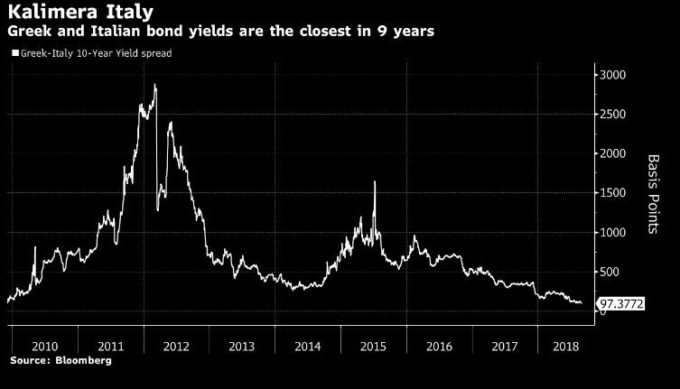
Greek Bond Yield Premium Over Italy the Lowest Since 2009: Chart

The spread between Greek and Italian benchmark bonds narrowed below 100 basis points for the first time since 2009 as continued tensions ahead of Italy’s budget and forthcoming credit ratings updates keep its bonds in focus.

Italy, which has the highest debt load in Europe, faces a likely confrontation between the ruling populist coalition and the European Union on its first budget next month and a possible Moody’s downgrade at the end of October.

Greece, with Europe’s highest debt-to-GDP ratio, came out of its bailout this month.

Source: Bloomberg

28
Αυγ

Ελληνες τραπεζίτες: Non event η άρση του waiver

Την πεποίθηση ότι η άρση του waiver είναι αντιμετωπίσιμη καταθέτουν στο Bloomberg οι επικεφαλής των τεσσάρων συστημικών τραπεζών.

«Οι ελληνικές τράπεζες έχουν ήδη αντικαταστήσει το μεγαλύτερο μέρος της έκτακτης χρηματοδότησης στην κορύφωση της κρίσης με δανεισμό από τις αγορές», τονίζει ο Φωκίων Καραβίας, CEO της Eurobank. «Αν δεν υπάρξει σημαντική περαιτέρω επιδείνωση της κατάστασης στις αγορές δεν περιμένουμε δυσκολίες στη χρήση των υπόλοιπων ελληνικών ομολόγων για παρόμοιες χρηματοοικονομικές συναλλαγές».

Το αντίκτυπο από το ότι δεν θα μπορούμε να χρησιμοποιούμε ελληνικό χρέος θα είναι ελάχιστο, εκτιμά ο Παύλος Μυλωνάς της Εθνικής Τράπεζας.

Από την πλευρά του, ο Χρήστος Μεγάλου της Πειραιώς πηγαίνει ακόμα παραπέρα περιγράφοντας την άρση του waiver ως πρακτικά «μη γεγονός» (non event). Η τράπεζα έχει πάρει μέτρα για μεταφέρει περίπου 1 δισεκατομμύριο χρηματοδότησης από την ΕΚΤ στη διατραπεζική αγορά repos.

Από την πλευρά της, η Alpha Bank ΑΛΦΑ +0,29% έχει διατηρήσει γραμμές χρηματοδότησης από την ΕΚΤ αντικαθιστώντας ελληνικά κρατικά ομόλογα και έντοκα με άλλο ενεργητικό που γίνεται αποδεκτό από την ΕΚΤ, υποστηρίζει ο Δημήτριος Ματζούνης. Η τέταρτη μεγαλύτερη ελληνική τράπεζα έχει επίσης αυξήσει τις συναλλαγές στην αγορά repos με διεθνείς αντισυμβαλλόμενους.

Καθώς οι τράπεζες ετοιμάζονται να ανακοινώσουν αποτελέσματα εξαμήνου οι επικεφαλής τους δηλώνουν ότι αυτό που χρειάζεται περισσότερο η Ελλάδα είναι να συνεχίσει τις μεταρρυθμίσεις και να προσελκύσει επενδύσεις. Για τις ίδιες η μεγαλύτερη πρόκληση είναι αντιμετώπιση του όγκου των μη εξυπηρετούμενων δανείων. Τους επόμενους μήνες θα παρουσιαστούν σχέδια ώστε το ποσοστό τους από κοντά στο 50% να μειωθεί γύρω στο 15% (σ.σ. mid-teens) ως τα τέλη του 2021.

«Επιπλέον βελτίωση της επενδυτικής εμπιστοσύνης για να προσελκυστούν εγχώριες και ξένες επενδύσεις απαιτεί σταθερή υλοποίηση των δομικών μεταρρυθμίσεων και αναμόρφωση του φορολογικού βάρους», δηλώνει ο Π. Μυλωνάς. «Τα βασικά ρίσκα, πέρα από τη μεταρρυθμιστική κόπωση προέρχονται από εξωτερικούς παράγοντες», με τους δυο γείτονες (Τουρκία, Ιταλία) να αντιμετωπίζουν οικονομικές δυσκολίες, προσέθεσε.

Πηγή: euro2day.gr

Comodo SSL