14
Αυγ

Πολύ κοντά στην εξάρθρωση κυκλώματος, στο οποίο συμμετέχουν και φοροτεχνικοί, που εισέπρατταν παρανόμως επιστροφές φόρου μέσω δήλωσης δωρεών στο δημόσιο για την απομείωση του κρατικού χρέους βρίσκεται το ΣΔΟΕ.
Σύμφωνα με πληροφορίες, το κύκλωμα έχει αποκομίσει ήδη παρανόμως ποσό που ανέρχεται σε περίπου 1 εκατ. ευρώ ενώ το συνολικό ποσό που είχαν αιτηθεί μέσω των φορολογικών δηλώσεων ξεπερνά τα 5 εκατομμύρια.
Το κύκλωμα, δοκιμάζοντας τα όρια ασφαλείας του taxisnet, λειτουργούσε ως εξής: υποβάλλοντας τροποποιητικές δηλώσεις φόρου εισοδήματος φυσικών προσώπων με τα οποία δηλώνονταν ως εισόδημα σημαντικά ποσά από τόκους καταθέσεων. Στη συνέχεια δηλώνονταν τα ίδια ποσά ως δωρεά προς το λογαριασμό απόσβεσης του δημόσιου χρέους. Η δωρεά αυτή προσέφερε έκπτωση φόρου ύψους 20% του ποσού που δηλωνόταν. Έτσι, ενώ προέκυπτε εισφορά αλληλεγγύης για το ποσό των τόκων που δηλωνόταν ως εισόδημα το ποσό της έκπτωσης από τη δηλούμενη δωρεά οδηγούσε σε επιστροφή φόρου. Έτσι και γινόταν. Μάλιστα, υπάρχουν ενδείξεις ότι το κύκλωμα ξεκίνησε με τη δήλωση μικροποσών προκειμένου να τεστάρει τις αντιστάσεις του taxisnet και στη συνέχεια αποθρασύνθηκε δηλώνοντας σημαντικά ποσά.
Οι έρευνες έχουν ξεκινήσει από το ΣΔΟΕ προκειμένου να διαπιστωθεί αν η υποβολή των τροποποιητικών φορολογικών δηλώσεων ήταν σε γνώση των φυσικών προσώπων στο όνομα των οποίων υποβάλλονταν ενώ διερευνάται και ο τρόπος με τον οποίο οριστικοποιούνταν οι τροποποιητικές δηλώσεις χωρίς την προσκόμιση στην εφορία των σχετικών δικαιολογητικών. Να σημειωθεί ότι από τη φετινή φορολογική δήλωση (φορολογικό έτος 2017) ο κωδικός 075 για την έκπτωση φόρου μέσω δωρεάς στο δημόσιο για την απόσβεση του δημοσίου χρέους έχει κλειδωθεί λόγω κατάργησης της σχετικής φοροαπαλλαγής.
Να σημειωθεί ότι δεν είναι η πρώτη φορά που στήνονται κομπίνες με επιστροφές φόρου. Στο παρελθόν έχουν εντοπισθεί επιτήδειοι οι οποίοι υπέβαλαν φορολογικές δηλώσεις αλλοδαπών μέσω taxisnet από τις οποίες προέκυπτε πλασματική επιστροφή φόρου μέσω δήλωσης εικονικών εισοδημάτων και φόρων που παρακρατήθηκαν. Εξαιτίας και αυτών των κρουσμάτων προχώρησε η αυτόματη προσυμπλήρωση των φορολογικών δηλώσεων.
Πηγή: capital.gr
11
Αυγ

Η απόφαση της ΕΚΤ να μη δέχεται πλέον ελληνικά κρατικά ομόλογα αποτελεί μία κίνηση που θα αυξήσει το κόστος για τις ελληνικές τράπεζες αλλά μπορεί να βοηθήσει στην ενίσχυση της εμπιστοσύνης προς την ελληνική οικονομία, τονίζει το πρακτορείο Reuters.
“Η άρση του waiver μπορεί να αναγκάσει τις ελληνικές τράπεζες να αναζητήσουν μία πιο ακριβή πηγή χρηματοδότησης μέσω του ELA. Εν τούτοις, η λήξη του προγράμματος αποτελεί κομβικό σημείο και ένδειξη ότι η Ελλάδα είναι επαρκώς υγιής για να σταθεί στα πόδια της. Επομένως, μπορεί να ενισχύσει την εμπιστοσύνη των επενδυτών προς την ελληνική οικονομία, αντισταθμίζοντας το πρόσθετο κόστος χρηματοδότησης” σημειώνει το Ρόιτερ. Οι ελληνικές τράπεζες δανείζονται λίγο περισσότερα από 8 δισεκ. από την ΕΚΤ και τώρα θα πρέπει να υποβάλουν ένα άλλο είδος εγγύησης για να διατηρήσουν την πρόσβασή τους σε αυτό το ποσό. Ωστόσο, πηγή που γνωρίζει την υπόθεση δήλωσε ότι η στροφή προς τον ELA θα είναι περιορισμένη και ότι το όριο του ELA για τις ελληνικές τράπεζες που είναι στο 8,4 δισεκ. ευρώ δεν θα αυξηθεί.
Financial Times: Ουδείς πιστεύει ότι η άρση του waiver θα οδηγήσει στην κατάρρευση των ελληνικών τραπεζών
Η έξοδος της Ελλάδας από το πρόγραμμα διάσωσης εντός του μήνα θεωρείται ως ένα πολύ σημαντικό βήμα προς τη λήξη της κρίσης στην πιο βεβαρυμένη οικονομία της ευρωζώνης. Όμως για τις ελληνικές τράπεζες, το τέλος του προγράμματος σημαίνει ότι θα είναι λίγο πιο δύσκολο για αυτές να διασφαλίσουν φθηνή πίστωση. Ο λόγος είναι ότι σύμφωνα με την πολιτική της ΕΚΤ, η Κεντρική Τράπεζα δεν θα δέχεται πλέον τα ελληνικά κρατικά ομόλογα και τα ομόλογα με εγγύηση Δημοσίου.
Έως τώρα μολονότι η Ελλάδα δεν διέθετε αξιολόγηση «επιπέδου επένδυσης», συμμετείχε στο πρόγραμμα της ΕΚΤ εξαιτίας του waiver που είχε αποφασισθεί.
Κανείς ωστόσο δεν πιστεύει ότι η άρση του waiver θα οδηγήσει στην κατάρρευση των ελληνικών τραπεζών. Εάν οι τράπεζες επιθυμούν να συνεχίσουν να έχουν πρόσβαση στα δάνεια με μηδενικό επιτόκιο της ΕΚΤ, μπορούν να καταθέτουν ως εγγύηση ομόλογα που ανήκουν στην επενδυτική βαθμίδα αντί για ομόλογα του δημοσίου. Εάν αυτό δεν είναι δυνατό, μπορούν να έχουν πρόσβαση σε ελαφρώς πιο ακριβά δάνεια με επιτόκιο 1,5% από την Τράπεζα της Ελλάδος μέσω του ELA.
Πηγή: ΑΠΕ-ΜΠΕ
11
Αυγ
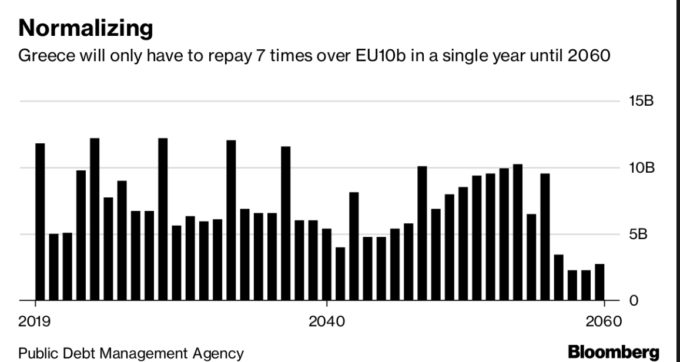
(Bloomberg) –Greece’s credit rating was raised by Fitch Ratings to the highest level since 2011 as the country approaches a successful exit from the ESM program and its sustained economic growth bodes well for debt sustainability.
“Debt sustainability is also underpinned by a track record of general government primary surpluses, our expectation of sustained GDP growth; additional fiscal measures legislated to take effect through 2020 and somewhat reduced political risks,” the agency said.
Geece’s bailout program ends on Aug. 20, which is also the last day that the European Central Bank will still accept Greek bonds as collateral for providing cheap funding to Greek lenders, and the country is expected to take some time to secure an investment grade rating as it tries to convince investors that normality is back.
Without a program, Greece needs that rating from at least one agency to be eligible for the ECB’s funding facilities for its banks. Investment grade would also make the nation’s sovereign bonds attractive to more investors, helping the government to regain sustainable access to markets.
Fitch upgraded Greece’s long-term foreign currency debt to BB- from B, showing that the agency isn’t that worried about the International Monetary Fund’s glum assessment of the country’s prospects.
“We expect fiscal performance to remain sound over the post-program period”, Fitch said in the report, adding that public finances are improving. “GDP growth is gathering momentum,” the rating agency said, forecasting a growth of 2 percent in 2018 and 2.3 percent in 2019.
With Greece exiting an eight-year period of bailout programs in just over a week, Greek governments must continue to implement reforms and stick to the fiscal path that has already been agreed with creditors to reassure investors.
“The domestic political backdrop has become somewhat more stable and the working relationship between Greece and European creditors has substantially improved, lowering the risk of a future government sharply reversing policy measures adopted under the ESM program,” Fitch said.
Greek bonds are still vulnerable to external risks which makes sticking to the fiscal agenda and implementing reforms even more important for securing investor confidence. Greek 10-year note yields hit their highest level since June 22 this week amid uncertainty around Italy.
Among the major rating companies, Moody’s Investors Service gives Greece the lowest grade and hasn’t changed its rating since February, well before the conclusion of the last bailout review and the decision in June by euro-area finance ministers for further debt relief measures for Greece. S&P Global Ratings was the first to act after the Eurogroup decision and it raised its rating by one notch to B+.
10
Αυγ
(Telegraph) — President Tayyip Erdogan of Turkey has told his citizens to sell their savings held in euros and dollars and buy lira in order to prop up the lira, citing an “economic war” after the country’s currency has plummeted.
The value of the Turkish lira has dropped sharply, ramping up fears of a contagion effect across emerging markets that could damage the world economy.
The lira lost 12pc against the dollar on Friday following an escalation of the tensions between Turkey and America. The currency has shed 22pc of its value since late July.
Turkey’s currency woes now place it ahead of Argentina in terms of its weakening against the dollar this year. The lira has depreciated by almost 40pc in 2018, compared to the peso’s more than-30pc fall since the start of the year.
Salman Ahmed at Lombard Odier said that the Turkish central bank’s inaction in the face of a “credit-fuelled overheating of the economy” lay behind the downward forces acting on the lira and other assets.
As the currency has become cheaper, concerns about inflation -the buying power it holds – have mounted.
However, while Argentina sought to combat the sudden uptick in inflation by hiking interest rates to more than 40pc and seeking a bailout from the IMF to combat capital flight – when investors suddenly withdraw funds – Turkey has made no such steps.
Mr Erdogan has previously described himself as “an enemy of interest rates” and told state TV ahead of a speech on Friday that “we will not lose the economic war”.
Within hours of being sworn in this July, Mr Erdogan appointed his son-in-law, Berat Albayrak as finance minister, and granted himself sole power to appoint rate setters at the central bank.
The move further undermined investor confidence in the country, citing a lack of independent monetary policy.
A key meeting on July 24 saw the central bank hold rates steady rather than raise them to combat inflation.
Mr Ahmed said: “This latest bout of negative sentiment is partially a result of the central bank’s reluctance to commit to continued monetary tightening under Erdogan’s watchful eye.
Paul Greer at Fidelity International said dramatic interventions were now needed as Turkey faced a “downward spiral” of investor confidence.
These could include the appointment of “pragmatic technocrats” and severe fiscal austerity to address high debt levels.
An immediate “aggressive interest rate hike” was also needed, Mr Grier said, with something of the order of 1,000 basis points as seen in Argentina this year. Such a move would slow the country’s economy down, after it had overheated considerably.
Some economists have suggested that capital controls may be imposed; these are limits on the money that can move in and out of a country.
These alone will not be enough shore up the economy, but they might help address the problem of capital flight.
Turkey is just one of the emerging market economies experiencing “cooling growth momentum and higher inflationary pressures” according to Mr Grier, “all of which keeps investors on the backfoot”.