
Mideast Stocks Plummet as Iran Plans to Boost Crude Exports.Stocks across the Middle East tumbled as the easing of sanctions against Iran raised the prospect of a surge in oil supplies to a market already reeling from the lowest prices in more than a decade. Shares in Tehran gained.
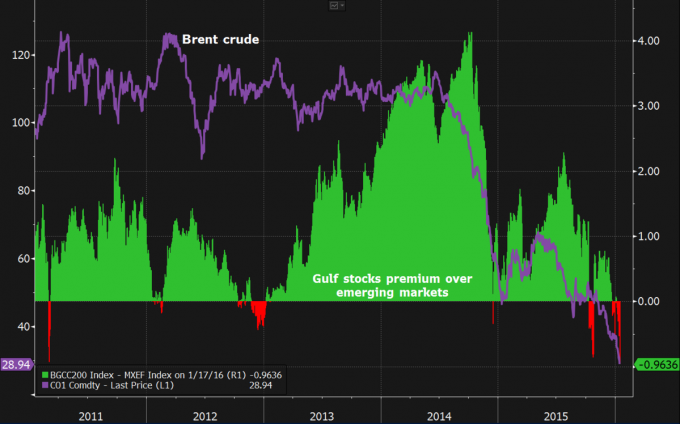
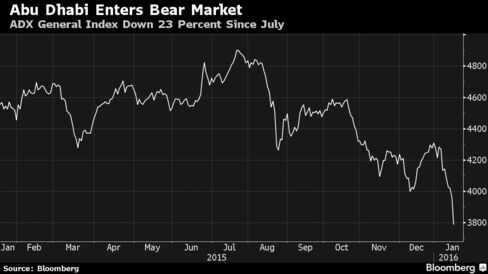
Saudi Arabia’s Tadawul All Share Index dropped 7.2 percent as of 2:02 p.m. in Riyadh to its lowest level since March 2011. Abu Dhabi’s ADX General Index fell into a so-called bear market. The Bloomberg GCC 200 Index, which tracks 200 of the six-nation Gulf Cooperation Council’s biggest companies, traded at 9.4 times estimated 12-month earnings, the lowest in almost seven years. Iran’s TEDPIX Index climbed 0.9 percent, according to data on the bourse’s website, extending Saturday’s 2.1 percent advance.
Iran, home to almost 10 percent of the world’s proven oil reserves, is starting preparations to boost exports after the United Nation’s nuclear agency on Saturday said the country has complied with the terms of an international agreement to curb its nuclear program. That threatens to put further pressure on prices, hurting the oil-dependent economies of the GCC.
“Iranian oil supply will come to the market as early as today or tomorrow,” said Nayal Khan, the Riyadh-based head of institutional equities sales trading at Saudi Fransi Capital. “The market’s recovery will depend on whether we can get oil back above $30.”
Oil Pressure
Iran is targeting an immediate increase in shipments of 500,000 barrels a day, Amir Hossein Zamaninia, deputy oil minister for commerce and international affairs, said on Sunday. It plans to add another half million barrels within months.
Concern that Iran may exacerbate the global supply glut sent Brent crude, a benchmark grade for more than half the world’s oil, to a new 12-year low on Friday, helping to spur a global stock rout. The Standard & Poor’s 500 Index fell to the weakest level since Aug. 25 in the worst start to a year for U.S. equities on record. Emerging-market stocks posted a third straight weekly decline, dropping to the lowest level since 2009.
The countries of the GCC account for about 30 percent of the world’s proven oil reserves.
Company Earnings
Saudi Arabia’s Al Rajhi Bank and Saudi Basic Industries Corp., one of the world’s largest chemicals manufacturers, were the biggest contributors to the drop on the Tadawul, losing 5.7 percent and 6.4 percent, respectively.
The gauge has tumbled 36 percent over the past year as the slump in oil has hurt company profits linked to government spending. Oil revenue accounts for more than 70 percent of the kingdom’s income.
Read more:link