
Greece set to win plaudits but not next tranche of bailout cash.Eurozone finance ministers were set to hail Greece’s recent steps to improve its public finances on Monday — but also to hold off on giving Athens a full bill of health it seeks as it prepares to return to financial markets.
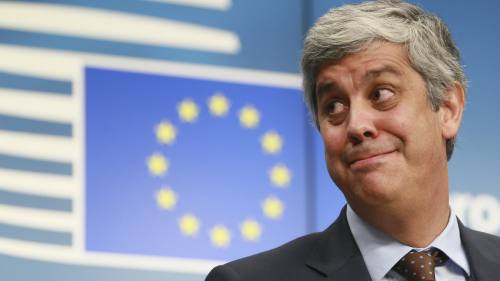
In Mário Centeno’s first meeting as president of the eurogroup, the finance ministers will confirm that Athens has adopted the vast majority of 113 economic reforms the country needs to take under this phase of its €86bn bailout.
The measures range from labour market reform to removing bureaucratic obstacles blocking a €7bn tourism and leisure project in Athens.
For Greece to receive its next allocation of bailout money, estimated at €6.7bn, a further check will need to take place in early February to ensure that the remaining measures have been completed. But at Monday’s meeting ministers will say the recent progress in effect closes the latest review of the bailout.
A delay could push back a bond sale that Athens had pencilled in for the end of this month — a big step for a country that is seeking to recover sovereignty over its economic policy and end its dependence on creditor cash.
Mr Centeno, the Portuguese finance minister who replaced Jeroen Dijsselbloem as head of the eurogroup this month, has downplayed the significance of any delay, as have officials in Athens.
“There has been a great push to do the prior actions that are envisaged,” he said last Monday. “We remain very optimistic about the prospects for Greece to move ahead.”
But in coming weeks, Mr Centeno, the eurogroup and their Greek interlocutors will have to get to grips with the more fundamental issue of Athens’ transition to post-bailout life — an issue EU diplomats say is closely bound up with the even more sensitive question of what further debt relief should be granted to the country.
The EU diplomats add they expect the talks on debt relief to begin in March. With the rest of the euro area firmly opposed to any outright cut in what Athens owes, the discussions will focus on other measures, such as handing over profits other countries’ central banks have made from operations in Greece and from restructuring earlier bailout loans.
Debt relief will be one of the main issues market investors scrutinise as they assess the state of post-programme Greece. Another will be the measures taken by the euro area to ensure Greece does not get into dire straits again. The standard practice after other euro area countries have emerged from bailout programmes has involved semi-annual assessments by the European Commission and European Central Bank — a process that stays in place until 75 per cent of bailout money has been repaid.
One diplomat said it was likely that the euro area would be “a little bit tougher” in the case of Greece, because of the sheer amount of money it owes, with one possibility being more frequent review missions. But Athens is likely to be sensitive to any impression that it is being treated differently to other bailout recipients.
An additional move could be to put in place a precautionary credit line with the euro area’s bailout fund, the European Stability Mechanism.
Guntram Wolff, director of the Bruegel think-tank in Brussels, said that such backstops are part of a “discussion that now needs to be had” as Greece prepares to confront market realities.
It would be “very difficult” for Greece to rely purely on market financing in the years ahead unless there is a further drop in the interest rates that private investors want in exchange for buying the country’s debt, he argued. He added that debt relief or a precautionary credit line were measures that could boost investor confidence, and so lower Greek borrowing costs.
While diplomats said that there was appetite to explore the credit line idea among euro area governments, they added that the first difficulty was convincing the Greeks.
“The first step for such a precautionary programme is for someone to demand it,” a senior EU official said. “The Greek government has very clearly stated that there is no willingness to apply for the programme.”
Source: FT