
EU policymakers revive push for European Monetary Fund.European officials have revived their push for a European Monetary Fund to tackle future crises in the eurozone in place of the IMF, which has yet to say whether it will join the latest Greek bailout.
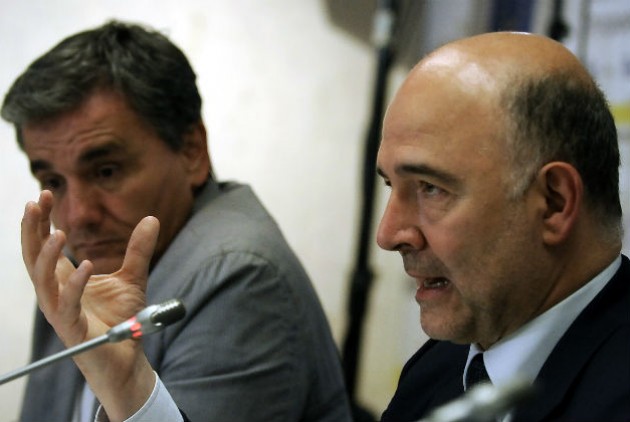
Pierre Moscovici, EU economy commissioner, told the Financial Times that continued divergence in growth rates within the eurozone could further strain solidarity between its members, so a European fund was needed “to be more efficient in tackling crises inside Europe”. Mr Moscovici is one of several senior EU policymakers to have recently mooted the idea of setting up an EMF — an idea that dates back to the earliest days of the eurozone’s debt crisis. The idea has returned to prominence as talks with the IMF over Greece drag on.
The EMF has emerged as a rare point of convergence among national governments that remain deeply split over most big plans for improving the governance of the euro area. Wolfgang Schäuble, Germany’s finance minister, repeated his support for the concept this week, and it is also backed by Jeroen Dijsselbloem, the president of the eurogroup. However, diplomats note the idea of EMF means different things to different people.
Mr Schäuble has focused on the benefits that such a fund, with more sweeping powers, would have for controlling national budgets — implying that this responsibility would be taken away from the European Commission.
Southern European governments instead see the EMF as a chance for the eurozone to break free from the tough lending conditions imposed by the IMF. Mr Moscovici, who is French, stressed the “common interest” of European states in ensuring no country’s economy falls behind, and said the EMF could help ensure this.
The commission will publish a discussion paper at the end of May on options for eurozone reform, with the EMF being one of the main ideas in the mix. Mr Moscovici said the “ambitious” paper would propose “strong initiatives” to bolster the bloc. One point stressed by policymakers is that any move to create an EMF would be a long-term project for future crises — not the current problems in Greece. Supporters of an EMF imagine it as an upgraded version of the European Stability Mechanism, the eurozone’s existing bailout fund, with a wider remit.
The ESM has an overall lending capacity of €500bn and can provide loans to countries that have reached agreement on a bailout programme with the rest of the bloc. It is still unclear whether the IMF will take part financially in Greece’s bailout programme before the next tranche of funding is needed to meet debt repayments due in July.
Poul Thomsen, the head of the IMF’s European department, rejected the idea of the fund striking a short-term deal. He said on Friday that the fund and Greece’s European creditors were still some way from a “credible” deal on giving Athens the debt relief that the Washington-based institution insists it needs.
Two hurdles now remain to IMF involvement, after Greece and its creditors agreed a package of reforms to pensions and income tax earlier this month. The IMF and euro area creditors need to find common ground on how long Greece should be required to maintain a primary surplus of 3.5 per cent of national income.
The IMF have also asked for greater “specificity” about what form the debt relief would take. The Greek government announced on Friday that they had significantly overachieved their surplus target last year, with revenues exceeding non-debt interest spending by 3.9 per cent of national income. This was well above the 0.5 per cent target.
The European Commission believes this is compelling evidence that Greece has been able to rein in spending and boost tax receipts, auguring well for continued budget surpluses. But the IMF said on Wednesday they believed most of the overshoot last year reflected a “largely temporary” boost to revenues.
Source : link