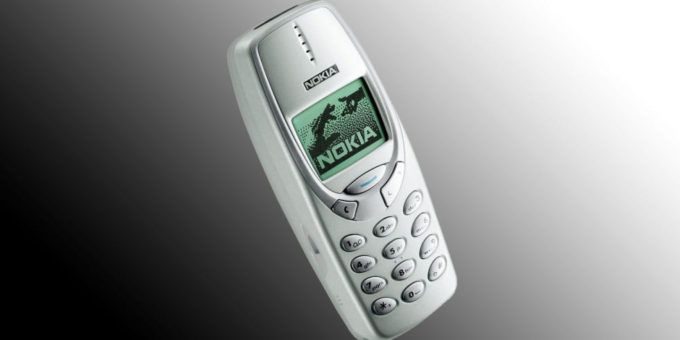
Dumb phone reveals uncomfortable truth for tech groups.High quality global journalism requires investment.The Nokia 3310 was my first, and best loved, mobile phone when it was released 17 years ago. The device — which always felt indestructible — has now withstood obsolescence itself: a Finnish company with rights to the Nokia brand is planning to revive the bestselling brick for those people tired of power-hungry smartphones and their interminable system updates.
In fact, the phone could prove one of the more exciting launches at this year’s Mobile World Congress in Barcelona next week — the industry jamboree more usually home to the world’s latest cutting-edge technologies. If nothing else, it signals the trend for so-called dumb phones — a desire to return to simpler times when handsets just made calls and sent texts.
But the relaunch of the 3310 also highlights an uncomfortable truth for the industry: it is still searching for its next big growth driver almost exactly a decade after Apple ushered in the smartphone revolution with the iPhone. Samsung will not stage its annual flagship phone launch at MWC after a literally explosive 2016. And without the South Korean maker of flammable Galaxy Note 7s, the event is in danger of lacking a spark.
It is little wonder that investors are still more excited by vague rumours of the next iPhone than Apple’s pivot into media and services.
Some mobile manufacturers and content producers are focusing on augmented reality. But the buzz is reminiscent of the wearables craze of two years ago, when tech companies declared the next big thing would be a glorified wristwatch. My own now languishes in a drawer after just a few weeks of early adopter posing.
On a nearby shelf sits the virtual reality headset now shunned even by my eight-year-old. For investors, the risk is that tech companies could waste a lot more money chasing the VR and AR markets. Sales of headsets and related products remain small as the “chicken and egg” problem persists: people will not embrace VR as there is no killer content, but content producers will not adapt products for platforms without a market.
But growth opportunities exist back in the seemingly boring world of smartphones, where even an old Nokia can cause a stir. Investors need to keep faith with phones: they may have changed only iteratively in the past few years, but could soon gain a new lease of life.
Chinese companies such as Huawei and Baidu are joining Apple and Google in turning handsets into voice-activated personal assistants — to be talked to and consulted, and packed with sensors to listen, watch and learn. It highlights how smartphones unlock the rest of the connected world: they are the means to book a ride to work and turn on the heating on the way home.
There is more to be done to improve existing platforms such as Siri and Alexa as artificial intelligence develops but voice recognition has become reliable enough to use regularly. The potential of this market is apparent by the take-up of even fairly rudimentary services.
Amazon’s Echo succeeded in re-training people to talk to devices — and this market will become much bigger when taken out of the kitchen and living room.
A phone could still look like an ancient Nokia — because the important thing is what happens inside. Before long it will make today’s smartphones appear as dumb as the Nokia 3310.
Source:link
Comments ( 0 )